
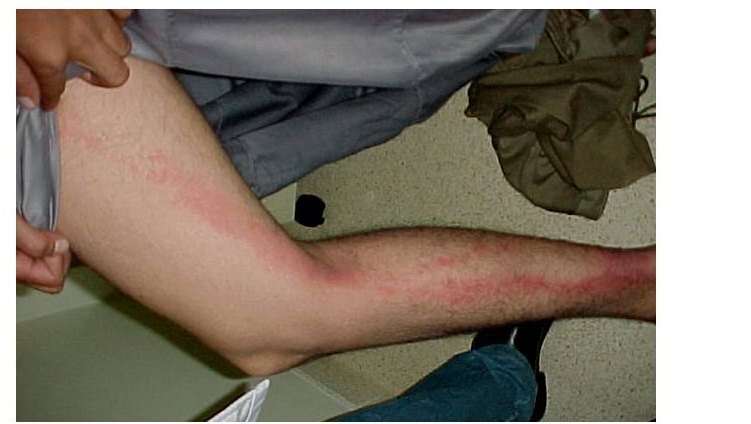
Erysipelas is a bacterial skin infection commonly caused by group A streptococci (Streptococcus pyogenes), though group B and other β-hemolytic streptococci may also be responsible. The bacteria enter through a break in the skin, causing a superficial infection. It presents as red, warm, swollen, and painful skin rash with a distinct raised border, often accompanied by systemic symptoms like fever, chills, headache, and fatigue. The affected skin may appear shiny, sometimes with streaks of redness along lymphatics.
In severe cases, blisters may form. Facial erysipelas is most often caused by group A streptococcus. Risk factors: Damaged skin (eczema, athlete’s foot, wounds) Diabetes, immunosuppression, or post-transplant status Prior history of erysipelas (recurrence possible) Treatment: First-line: Penicillin or cephalosporins (oral or IV depending on severity) Alternatives (if…