docplexus

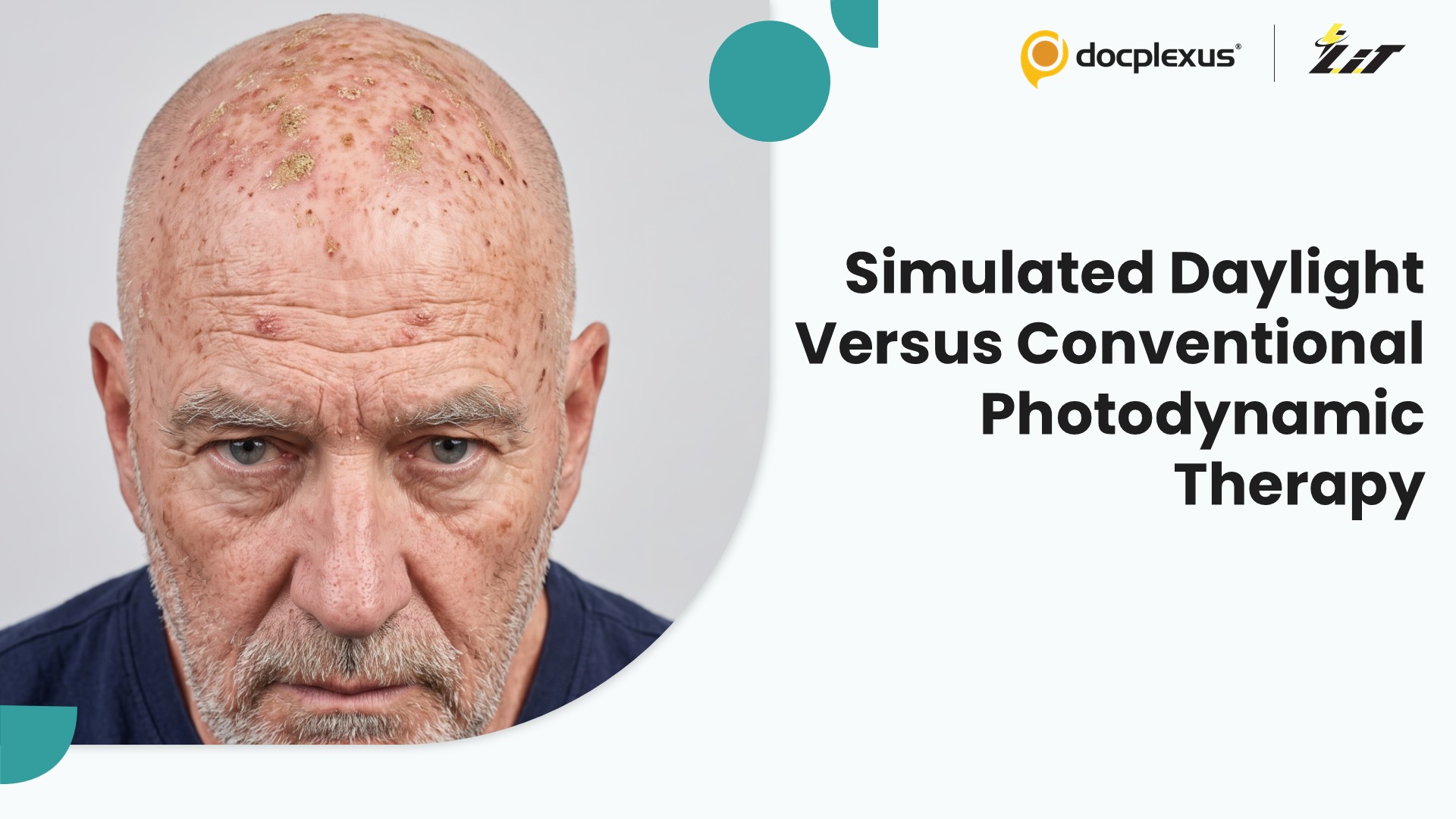
A single-center randomized controlled trial evaluated simulated daylight photodynamic therapy versus conventional photodynamic therapy in adults with symmetrically distributed mild to moderate actinic keratoses. Affected sites were randomly assigned to conventional photodynamic therapy on one half and simulated daylight photodynamic therapy on the other, using 5-aminolevulinic acid hydrochloride as the prodrug. Early treatment failure was assessed at 3 months and overall clearance at 1 year. The non-inferiority margin was −8%.
Among 69 participants with 1,458 actinic keratoses, 89.9% of lesions were on the face and scalp and were diagnosed clinically and dermoscopically. At 1 year, clearance was lower with simulated daylight than conventional photodynamic therapy (71.0% vs 85.3%; P<.001), failing to demonstrate non-inferiority. Mean pain during illumination was substantially lower with…