docplexus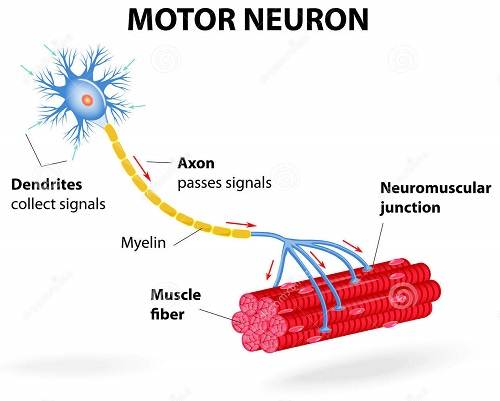
A remarkable match exists between the size of the cell body of a motor neuron , its position in the recruitment series, the pattern of action potentials it discharge and the metabolism and the mechanics of the muscle fibres which comprise the motor unit. Small diameter motor neurons which discharge on steady, natural excitation a maintained pattern of low-frequency action potentials innervate muscle fibres with slow mechanical characteristics and a fatigue resistant Oxidative metabolism. By comparison, larger motor neurons firing irregular bursts of action potentials innervate muscle fibres with a Fast mechanical action energised by a rapidly fatiguing Glycolytic metabolism.
The two form of motor unit are called respectively SO- or type 1 motor units, and FG- or type 2 motor units. An intermediate form with FOG characteristics is found in most muscles. In this form a Fast mechanical…