
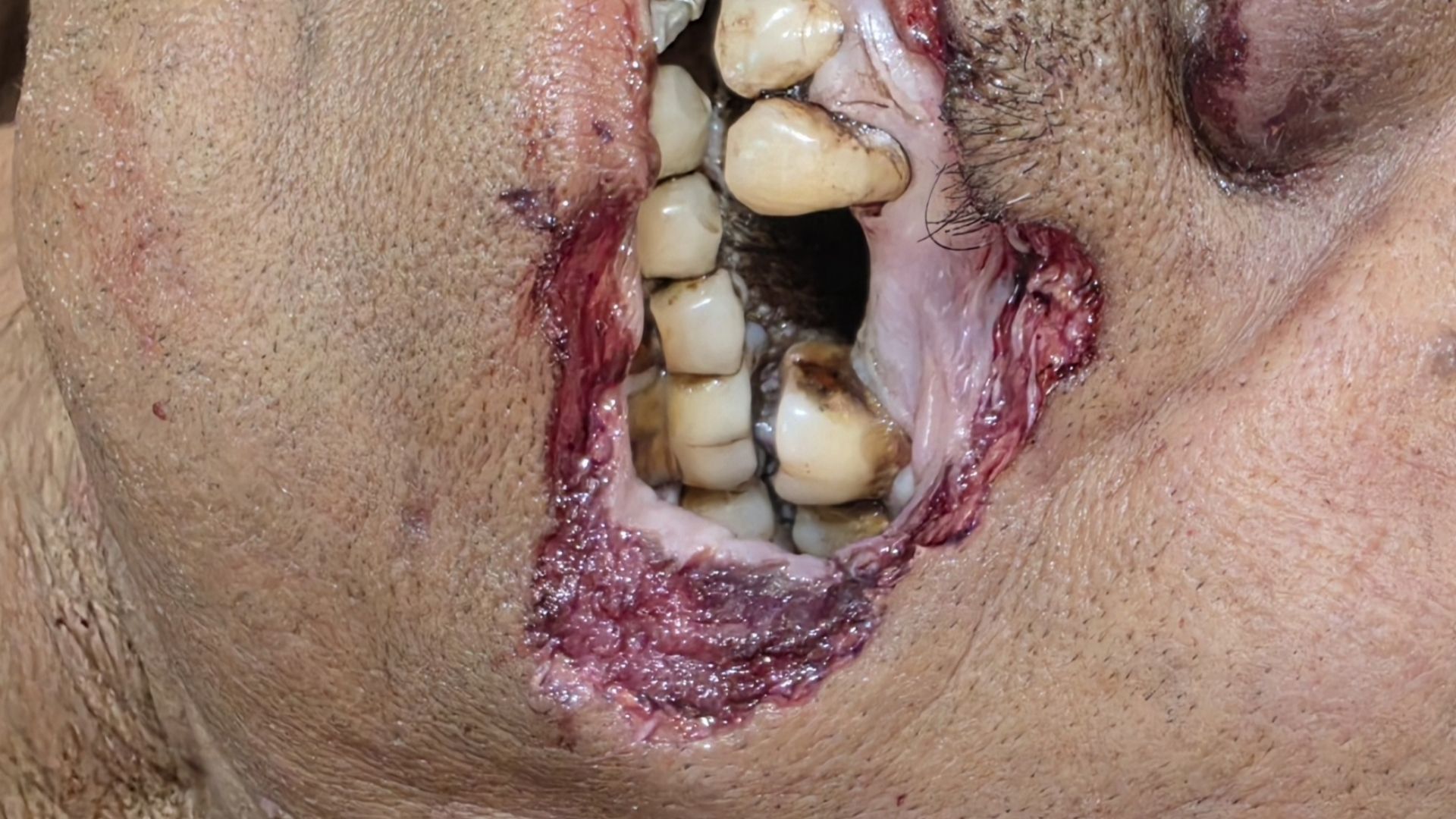
Postmortem animal activity can significantly alter human remains, often creating findings that closely resemble antemortem injuries and complicate medicolegal interpretation. This case highlights early postmortem rodent scavenging involving facial tissues in an elderly male, where extensive soft-tissue destruction mimicked traumatic injury. Despite alarming external findings, the actual cause of death was massive upper gastrointestinal bleeding, with no relation to the facial lesions.
Rodents, due to their characteristic gnawing behavior, commonly target exposed soft tissues such as lips, nose, and eyelids, producing irregular, scalloped defects without vital reaction. These features are critical in differentiating postmortem artefacts from true trauma. The case underscores a key forensic principle: Not all dramatic injuries indicate violence—some are artefacts of nature after death.…