
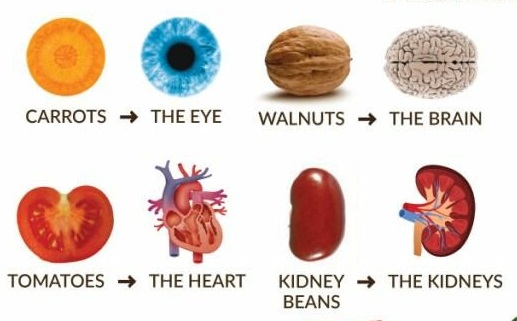
Strange as it may sound, doctors have an obsession for food items when describing body parts, organs or even human excrements. It often starts with the relatively innocuous description of kidneys as bean-shaped organs and the human brain as walnut shaped, that most students of biology are familiar with. But they soon go on to use “café-au-lait” marks, salmon patches, and cherry red spots to describe different types of skin lesions that tell tales of diseases from a brown nevus or angioma or bleeding spots.
And when doctors, who by the way derive their professional origin from butchers, delve inside the human body while cutting up corpses during autopsy, they resort to food items to describe what they see. If the liver shows alternating red and white stripes as in early cirrhosis the description goes as “nut meg liver”. If the intestine shows a central narrowing due to a cancerous…