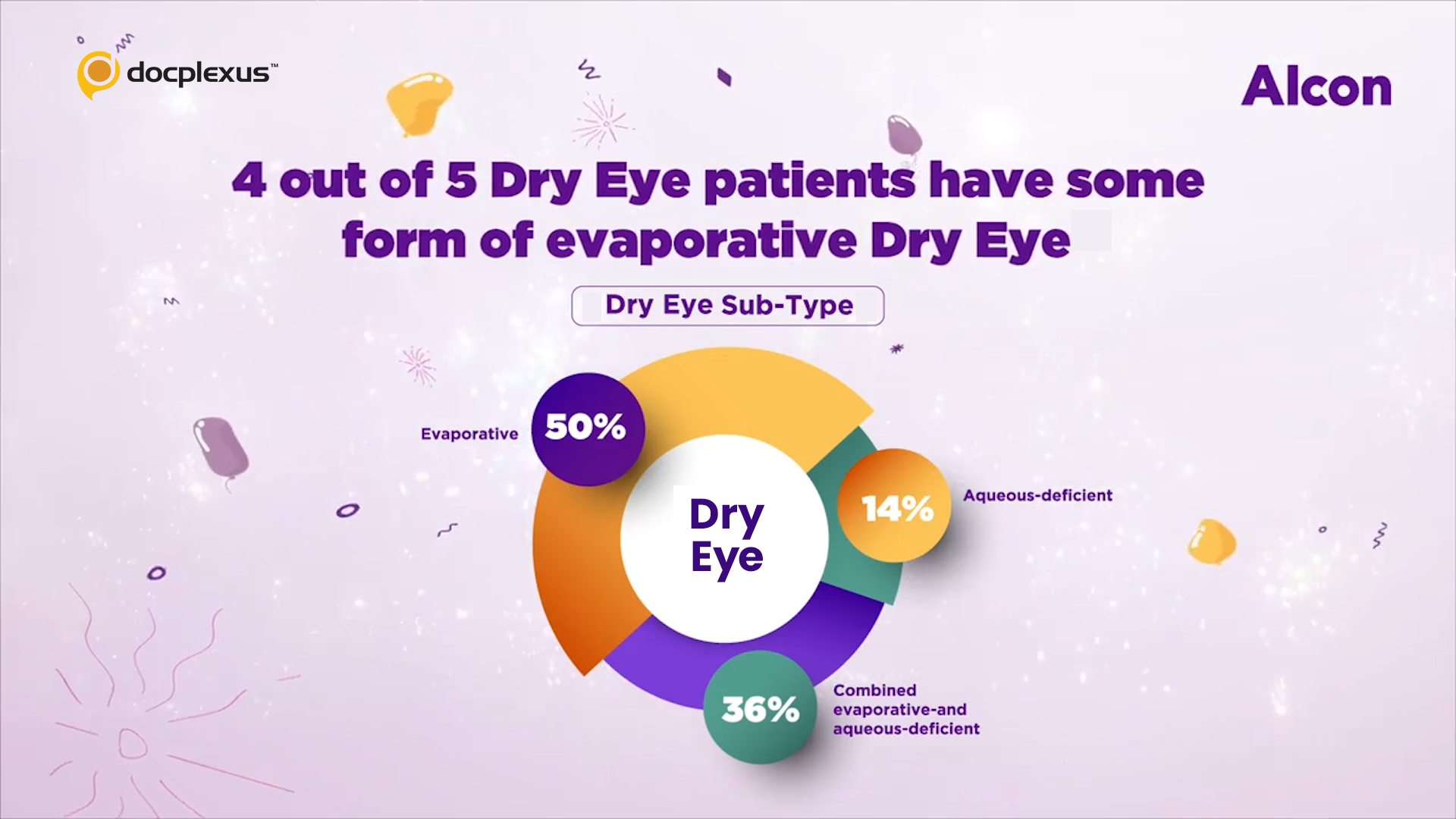
Accurate classification of dry eye is essential for determining the best course of treatment. Aqueous deficient dry eye (ADDE), evaporative dry eye (EDE), or a combination of the two, with or without additional etiological factors, are the two leading causes of dry eye disease (DED), with meibomian gland dysfunction as the primary contributor to EDE.1 The global prevalence of DED is 5 - 50%, with the restoration of the ocular surface and tear film as the stand-alone treatment option.
Lubricants can help replenish the entire tear film, and their constituents like lipids, proteins, mucins, and salts can maintain the tear film homeostasis.2 Watch this exclusive video to know how the propylene glycol (PG) and hydroxypropyl guar (HPG) formulation with added nano-sized lipid excipient optimizes the lipid surface and forms a viscoelastic protective barrier on the surface epithelium to promote…