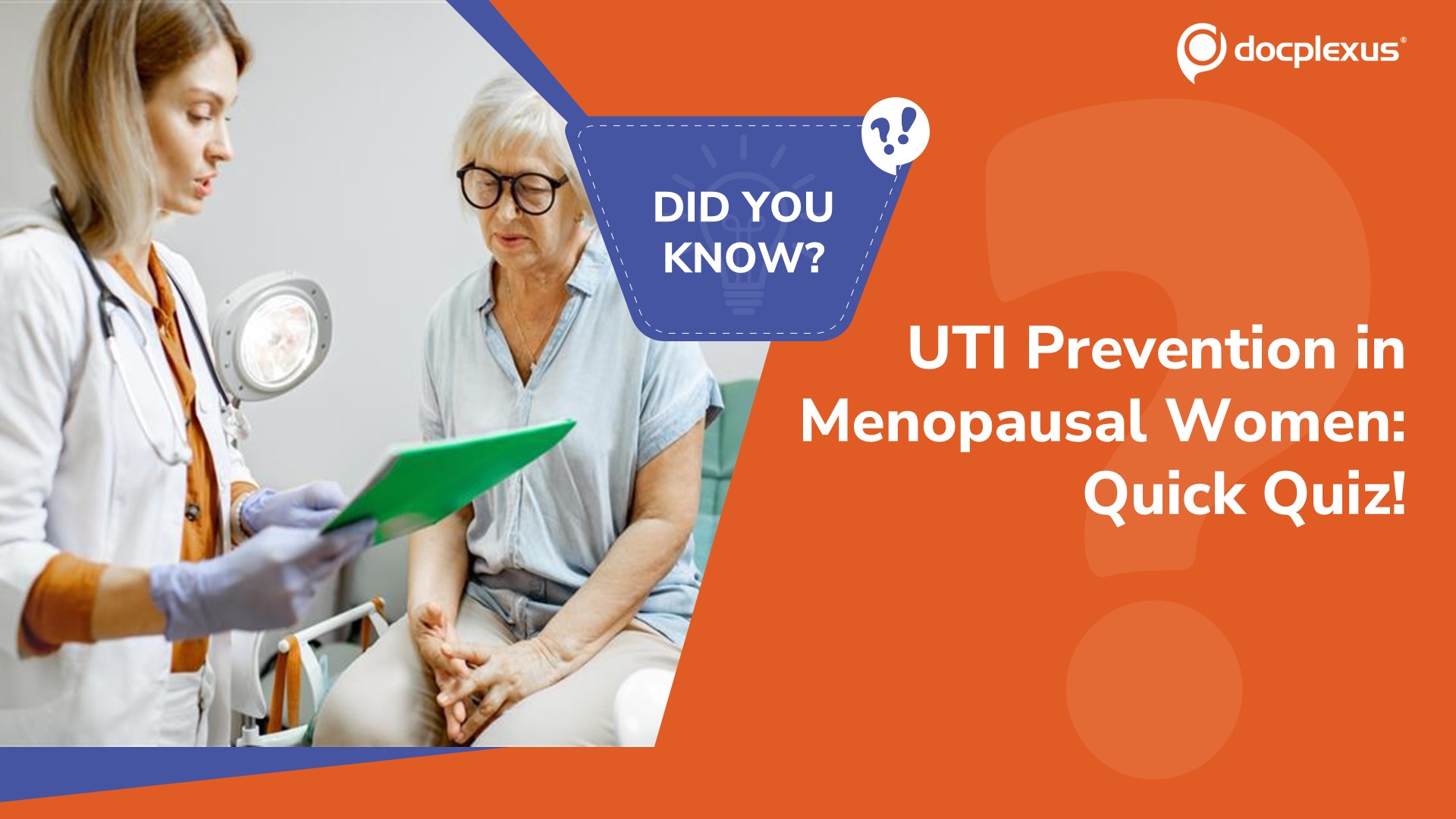
Recurrent UTIs are common in peri- and postmenopausal women due to hormonal changes that disrupt the urogenital environment. Declining estrogen levels lead to mucosal thinning and reduced protective flora, increasing infection risk. Prevention strategies focus on restoring vaginal health, improving local immunity, and reducing reliance on antibiotics through personalized care and education. Early intervention and regular follow-up in primary care are key to long-term management.
Here is a quick question about preventing recurrent UTIs in peri- and postmenopausal women! References: Journal of Urology, Journal of Mind and Medical Sciences ##Disclaimer## The content provided on Docplexus is intended for educational purposes only. While we strive to ensure its accuracy, we make no warranties, explicit or implied, about the suitability, reliability, or adequacy of the information, including…