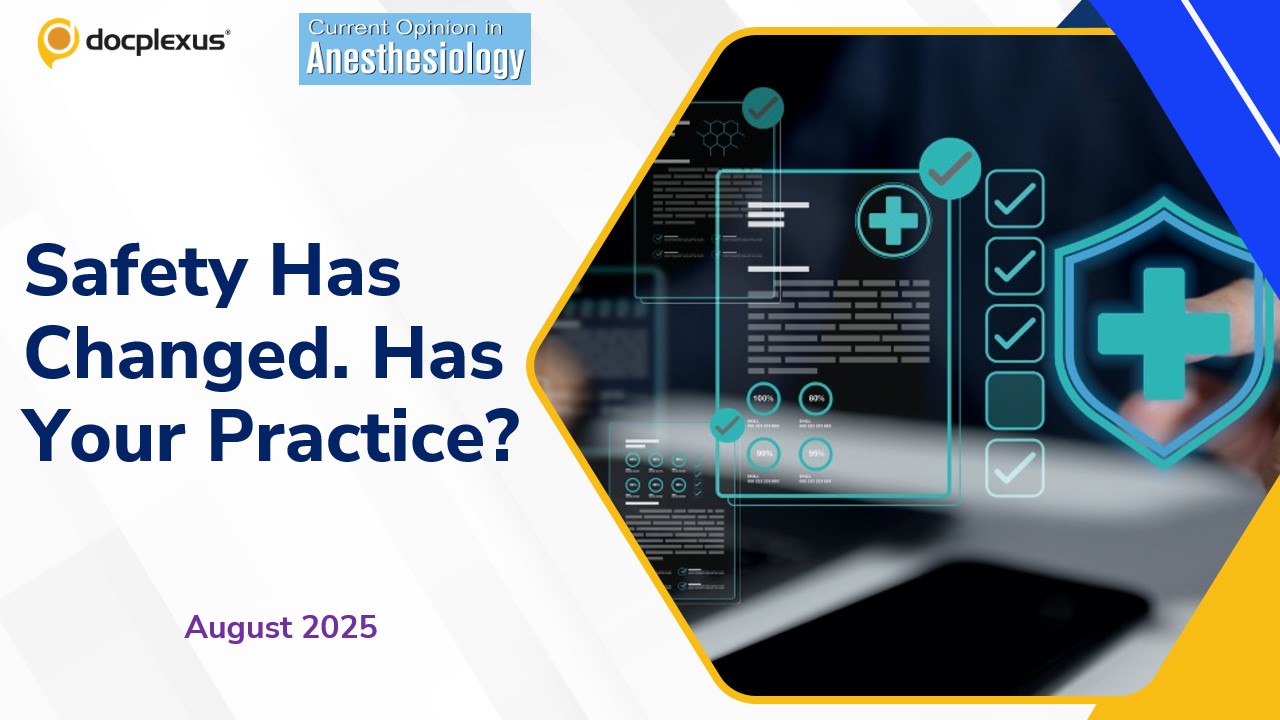
The landscape of patient safety is evolving, and anesthesiology is at its epicenter. This review introduces Safety-I, II, and III—three complementary frameworks redefining how clinicians understand, analyze, and prevent adverse events. Safety-I emphasizes tracing linear errors and root causes; Safety-II views human adaptability as a source of resilience; and Safety-III sees safety as an emergent property arising from dynamic interactions among people, machines, and systems. With new case studies and applied models entering perioperative care, anesthesiologists must grasp how these paradigms reshape the prevention of intraoperative events, airway crises, and medication errors.
Understanding these frameworks isn’t just academic—it’s central to safer anesthesia systems. Explore how Safety-III could change your next morbidity and mortality review— read the full article now . How can…