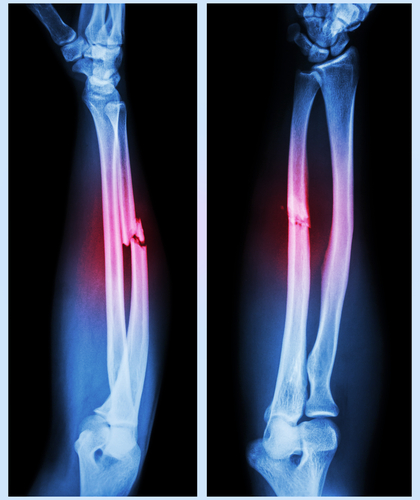
Fractures involving radius and ulna are common and are classified according to the anatomic location as proximal one-third , distal one third and middle third fractures. Appropriate management is critical to limit disability. Forearm bones are critical to the function of the upper limb. The distal and proximal radioulnar joints and the interosseous ligaments are involved in the full range of movement of the upper limb. Mid forearm or diaphyseal forearm fractures result in significant compromise to the complicated anatomy.
Fractures of the mid forearm in adults are notoriously unstable. Complications and inadequate management can lead to severe impairment of forearm function. Causes and Clinical presentation Mid forearm fractures can occur as isolated injuries or as a part of poly trauma. Direct blows to the forearm can cause mid forearm fractures. Isolated ulnar fractures are called…