
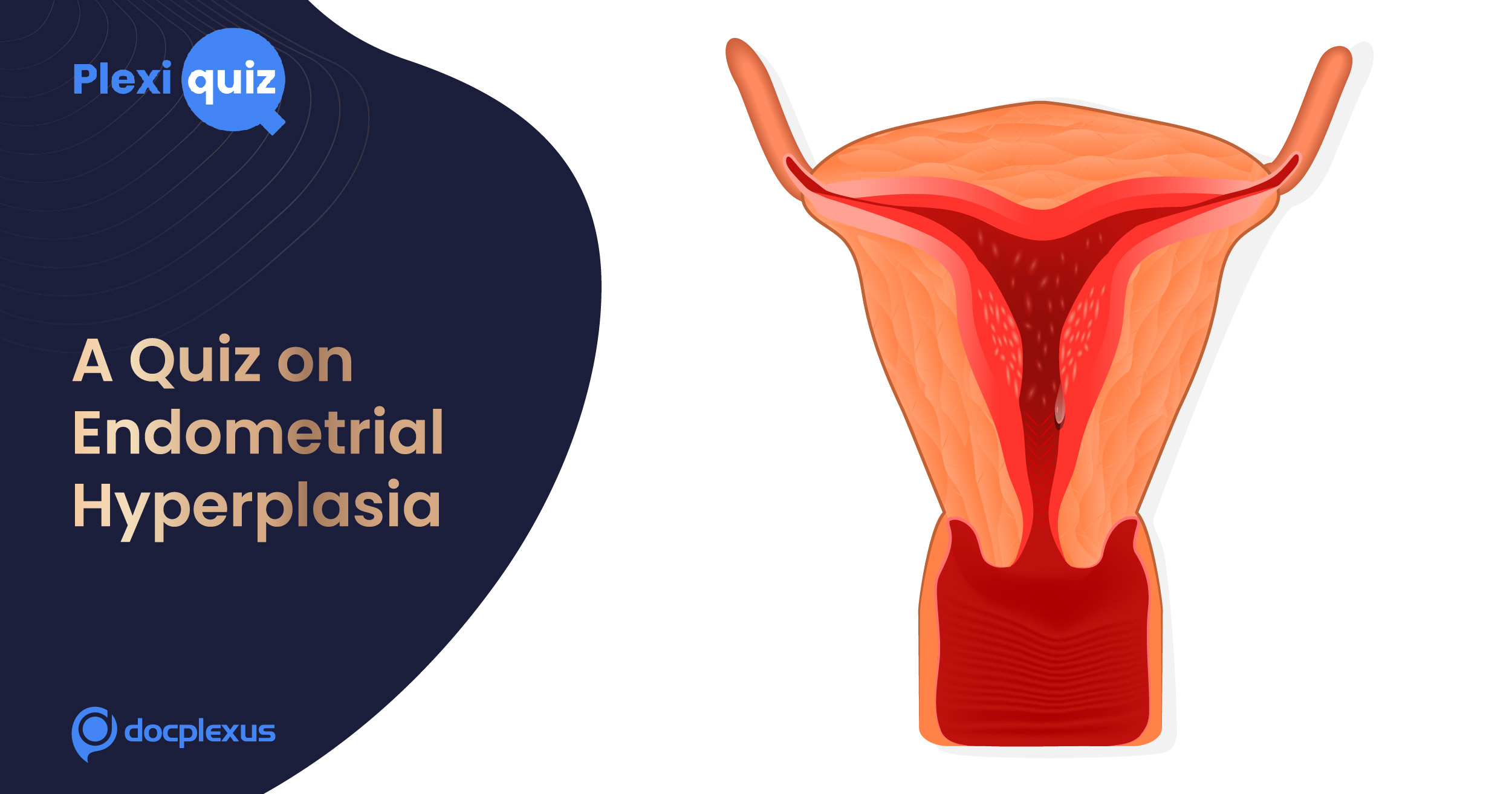
Endometrial hyperplasia is characterized by exposure to endogenous or exogenous estrogen accompanied by deficiency of progesterone. The condition is a precursor to endometrial carcinoma. However, the progression to carcinoma can be prevented by vigilance and interprofessional diagnosis and management. Various factors, including age, obesity, genetic predisposition, and polycystic ovaries can contribute to the condition's etiology. The hyperplasia may or may not involve atypia.
A glandular to stromal ratio of >50% is a strong indicator of hyperplasia, along with mild crowding, cystic dilatation with sparingly seen outpouching, and mitoses. The diagnosis usually involves transvaginal ultrasound, PAP smear test, and biopsy. Treatment involves progesterone therapy, levonorgestrel-releasing intrauterine system, or surgical management. Can you answer the following questions based on the…