
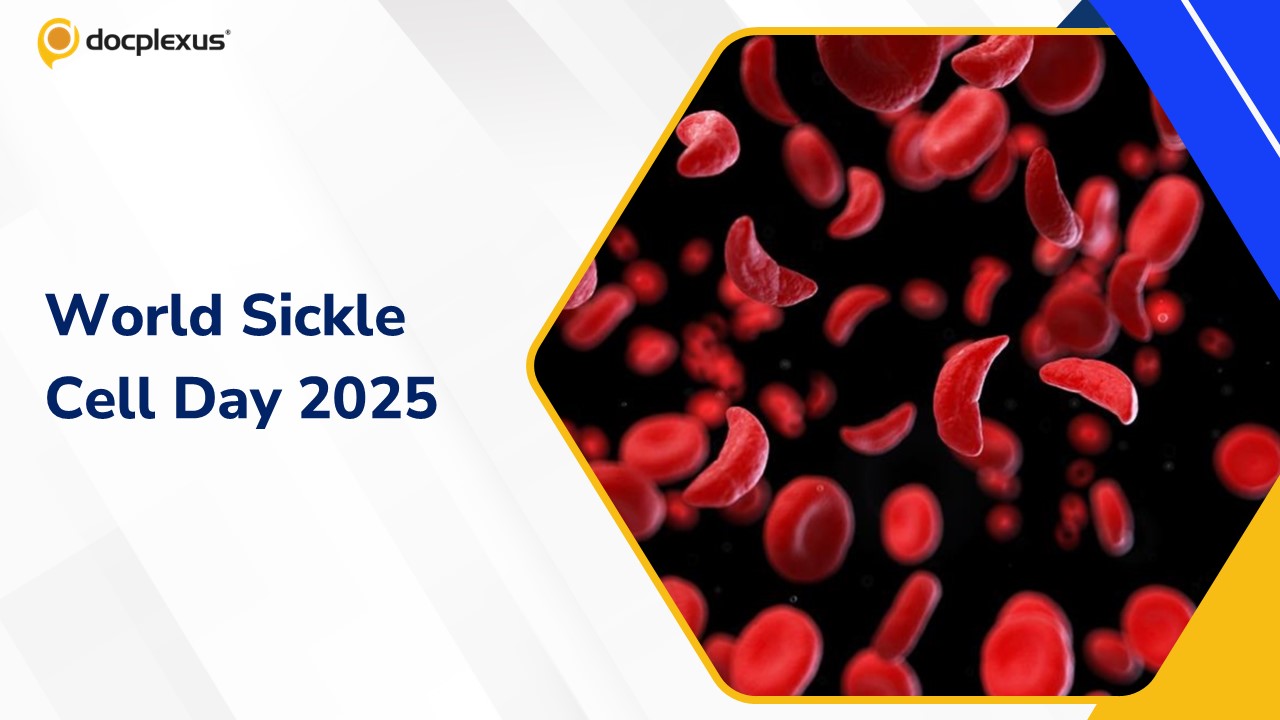
Sickle cell disease (SCD) is a serious inherited blood disorder characterized by abnormally shaped red blood cells that become rigid and sickle-like, impairing their ability to carry oxygen and flow smoothly through blood vessels. The disease is caused by a single point mutation in the β-globin (HBB) gene, which leads to the production of hemoglobin S, an abnormal form of hemoglobin that polymerizes under low oxygen conditions, causing red cells to deform. Recent global estimates show that approximately 7.74 million individuals were living with SCD in 2021, a 41.4% increase since 2000.
The disease burden is especially high in western and central sub-Saharan Africa and India. In response to its global health impact, the United Nations established World Sickle Cell Day in 2008. It is observed annually on June 19 to raise awareness, promote early detection, support research, and reduce…

