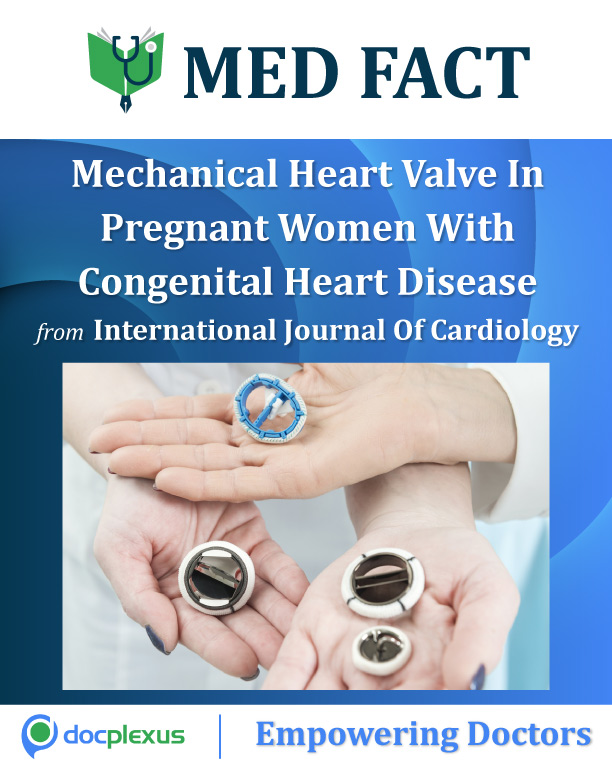
Synopsis A growing number of adult women with congenital heart disease (CHD) are treated with prosthetic heart valves (PHV). The choice of valve type is difficult for young women with future desire to become pregnant. The high deterioration rate of biological PHV at young age poses the woman at risk of going through pregnancy with a stenotic or regurgitant PHV.
Mechanical PHV necessitate anticoagulation therapy, but there are no anticoagulation regimens that are sufficiently proven to be effective as well as safe for both mother and child. The present study evaluates the pregnancy outcome and anticoagulation regimes in women with mechanical and biological PHV for congenital heart disease. This week’s “ MED FACT ” discusses a retrospective, multicenter, cohort from the International Journal of Cardiology, “ Biological versus mechanical heart valve prosthesis during pregnancy in women…