
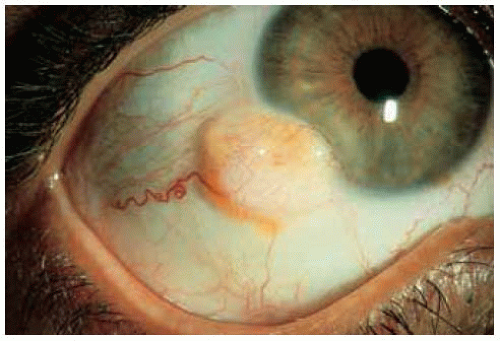
The dermoid are usually unilateral rarely can be bilateral may involve entire cornea or may be confined to conjunctiva only inferotemporal site is commonest about 70 percent prevalence is 1 in 10 000 or one in 3500 or one in 5600 male female ratios is 3 to 2. They are graded according to corneal involvement grade 1 grade 2 grade 3 if limbal dermoid is not involving visual axis treatment is observation.
If, it involves visual axis and threatens vision treatment is surgical which is both visual and cosmetic surgical modalities are lamellar keratoplasty stem cell graft amniotic membrane graft smile lenticule tattooing and fibrin glue in this procedure excision of limbal dermoid is done underlying discoloured area is tattooed corneal lenticule is put in place and held in position by fibrin glue post-operative pain and astigmatism is less as we do not apply sutures.