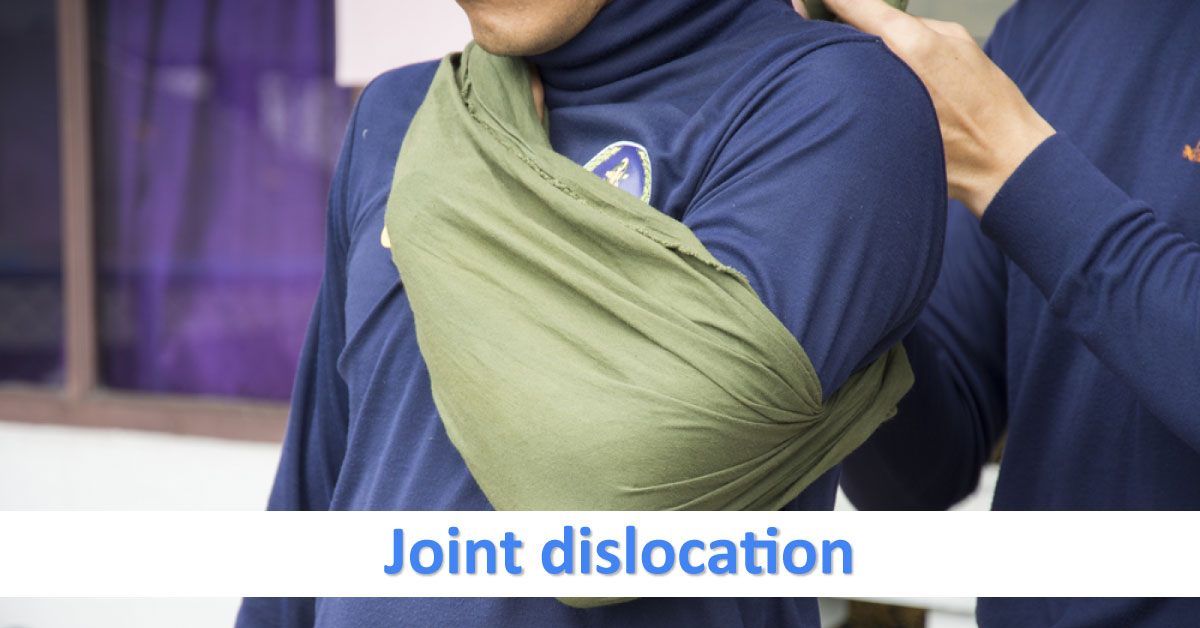
Management of sports-related dislocations can be challenging. Immediate diagnosis and intervention can result in improved patient outcomes. A detail knowledge of joint anatomy, neurovascular injuries and use of evidence-based treatments can improve the patient outcomes. Shoulder Dislocations: Shoulder dislocation accounts for approximately 59.4% of sports related joint dislocations.
THis is because the shoulder joint has highest degree of motion making it more susceptible for dislocation. During primary assessment, the patient with an anterior dislocation is often hesitant to move the shoulder and usually holds the shoulder in an adducted cradle-like position. The humeral head can be felt anterior, inferior, and medially in most anterior shoulder dislocations. Reduction strategy: The traction/countertraction technique is a commonly used method for reduction and is the most practical to…