
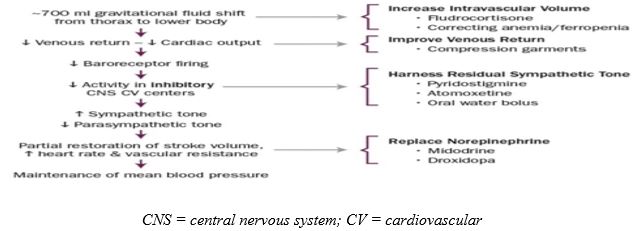
Orthostatic hypotension (OH) is a sustained fall in blood pressure on standing that can cause symptoms of organ hypoperfusion. OH is associated with increased morbidity and mortality and leads to a significant number of hospital admissions, particularly in the elderly (233 per 100,000 patients >75 years of age in the United States). OH can result from volume depletion, blood loss, large varicose veins, medications, or because of defective activation of sympathetic nerves and reduced norepinephrine release on standing (i.e., neurogenic OH).
The prevalence of neurogenic orthostatic hypotension (nOH) increases with age and is associated with autonomic failure in neurodegenerative diseases (e.g., Parkinson's disease). Symptoms can interfere with daily activities that require standing or walking and can increase the risk of falls and related morbidity. It frequently affects older people and…