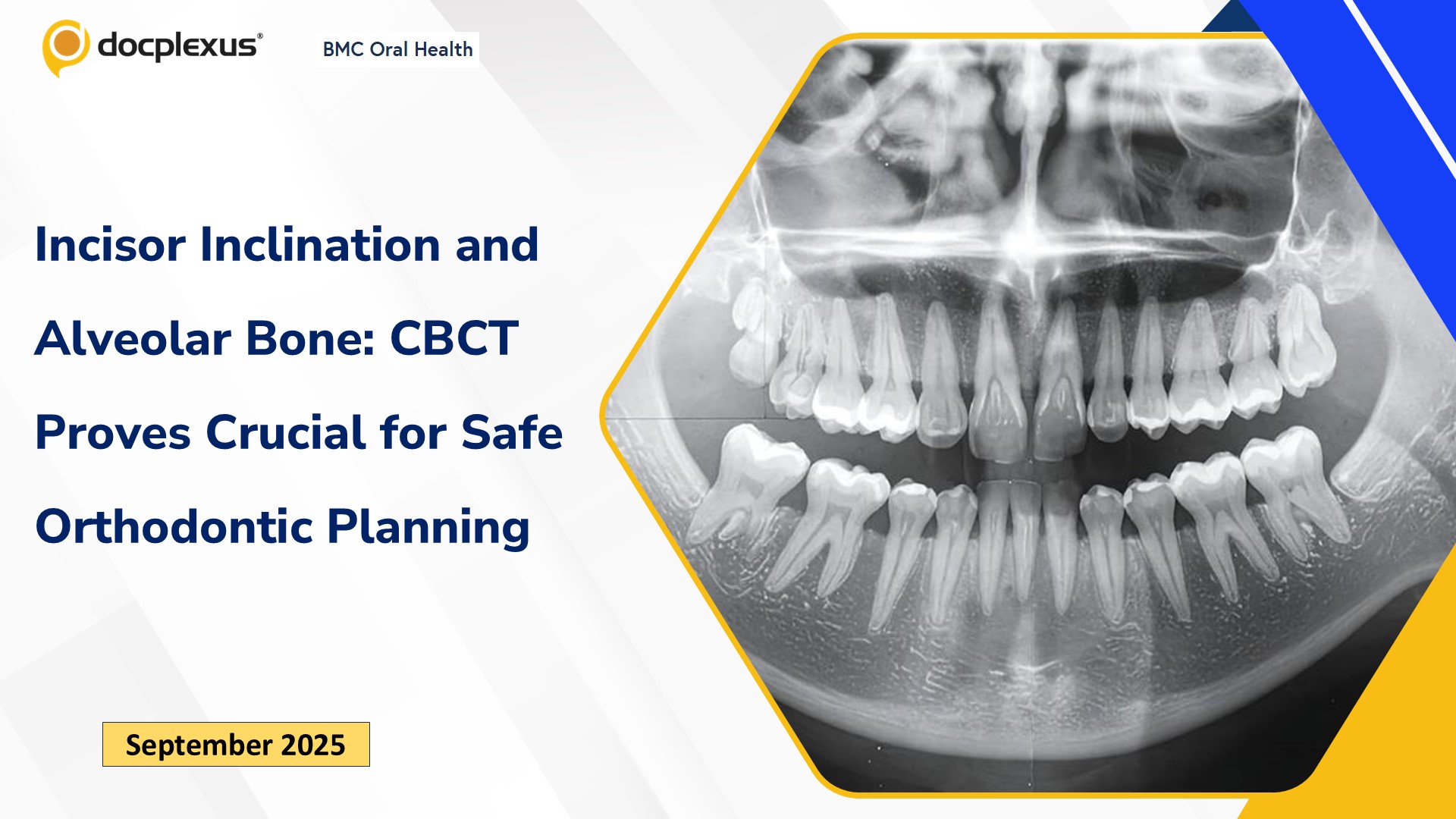
In a systematic review of eight studies , researchers confirmed a significant relationship between maxillary and mandibular incisor inclination and surrounding cortical alveolar bone thickness . Findings show that palatal bone is generally thicker in the maxilla, whereas labial bone is thinner in the mandible—raising the risk of dehiscence or fenestration with aggressive tooth movement. The review emphasizes CBCT as an essential tool for evaluating complex orthodontic cases, particularly those involving skeletal discrepancies, preexisting bone defects, or movements near alveolar limits. Standardized methodologies and longitudinal studies are needed to refine evidence-based treatment planning.
To read more ; Click here . Are you using CBCT consistently to prevent iatrogenic bone loss in complex orthodontic cases? ##Reference## d’Oliveira, N.G., Monill-González, A., Valle-Cañada, P. et…