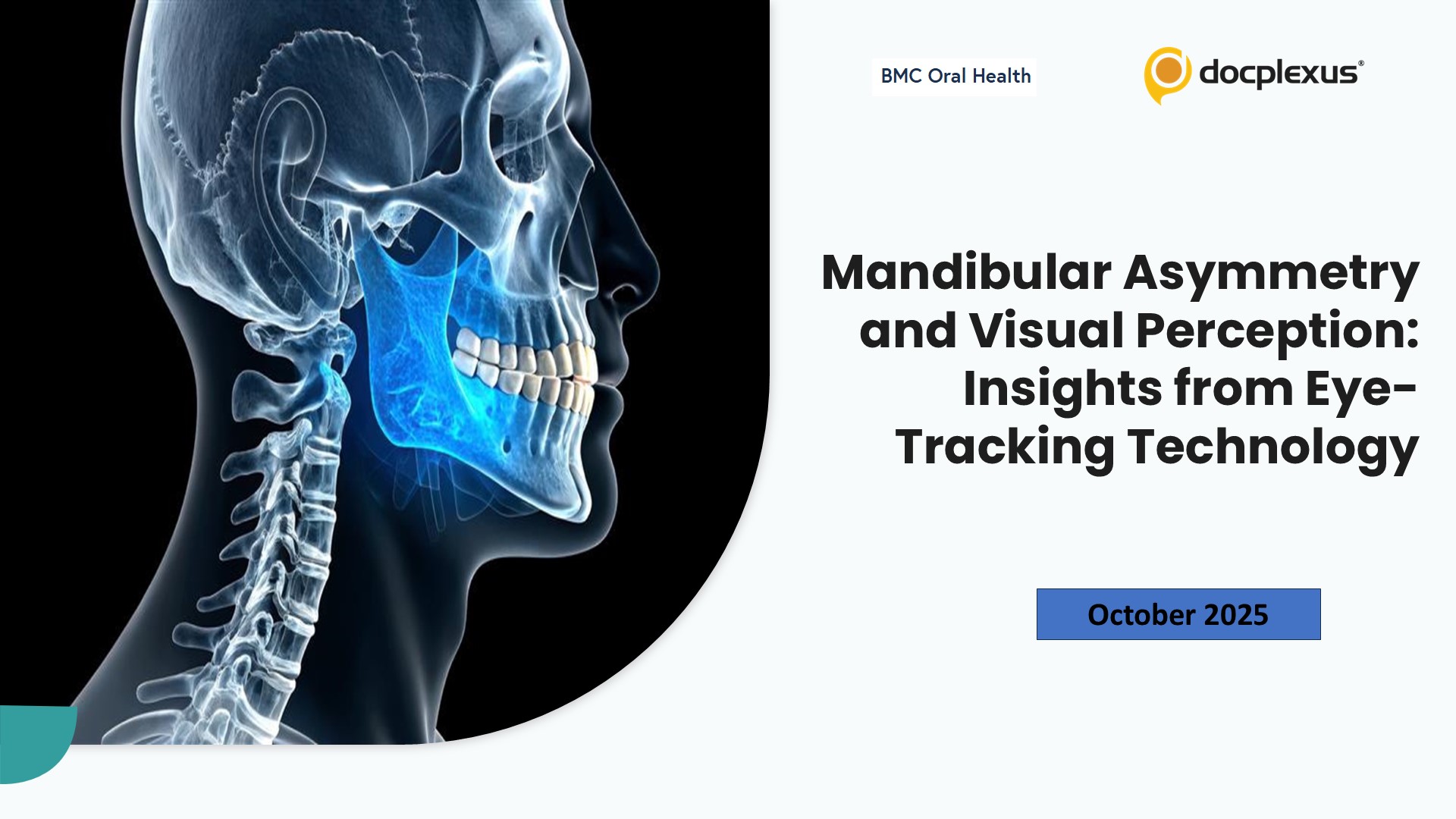
A 2025 study in BMC Oral Health used eye-tracking technology to investigate how varying degrees of mandibular asymmetry influence visual perception among orthodontists and non-professionals . Analyzing gaze behavior across images with 2–8 mm simulated chin deviations , researchers found that while the direction of asymmetry did not affect attention, greater deviations (8 mm) drew faster and more focused visual fixations toward the lower lip–chin area . Orthodontists showed heightened diagnostic sensitivity with fewer pre-fixations in severe asymmetry cases, highlighting professional perceptual precision. The findings emphasize that increasing asymmetry significantly alters visual attention patterns, offering valuable insights for esthetic assessment and orthodontic treatment planning.
To read more; Click here ##Reference## Sarı, E., Dindaroğlu, F., Durmuş, B. et al. Exploring mandibular…