
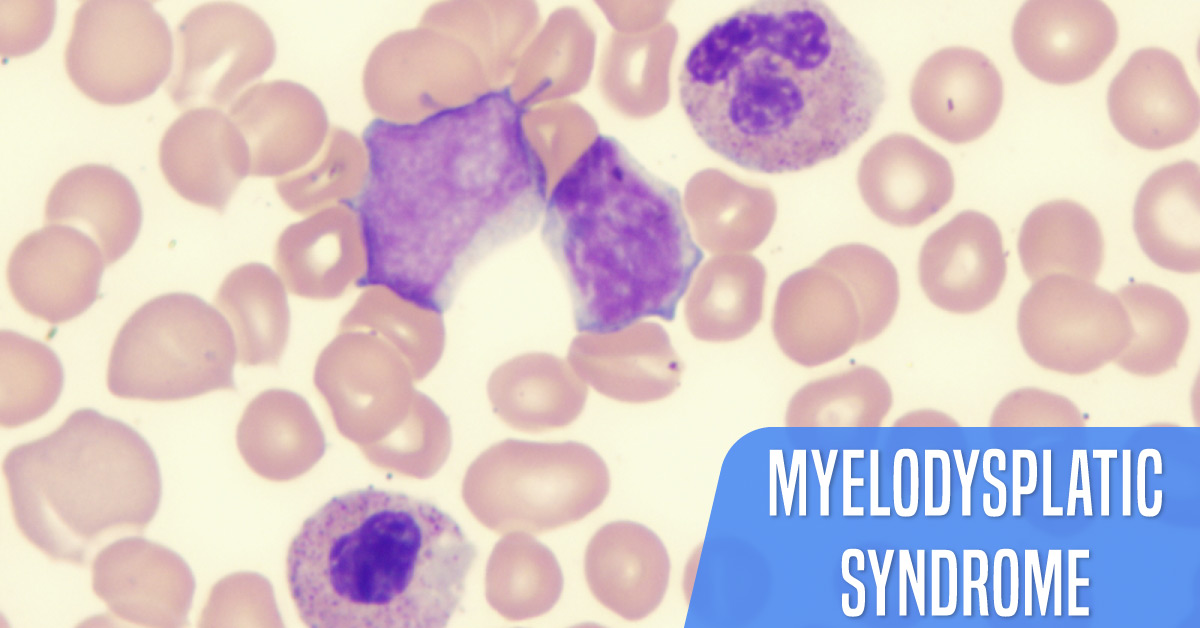
WHAT IS MYELODYSPLASTIC SYNDROME (MDS)? Myelodysplastic Syndromes or MDS is a blood disorder that causes a drop in the number of healthy blood cells. It is sometimes also referred to as a Bone Marrow Failure Disorder. The Bone Marrow is a soft, gelatinous tissue found in bones and is responsible for producing Red Blood Cells (that carry oxygen around the body), White Blood Cells (that help fight infection), and, Platelets (that help the blood to clot). In MDS, the bone marrow doesn’t make enough of these three types of blood cells.
Instead, it makes undeveloped and abnormal cells that don’t function properly. And, gradually the bone marrow becomes full of these abnormal blood cells, eventually spilling out into the bloodstream. WHAT ARE THE DIFFERENT TYPES OF MDS? Depending on the type of blood cells affected, there are three main types of MDS: Refractory Anaemia – just the red blood…