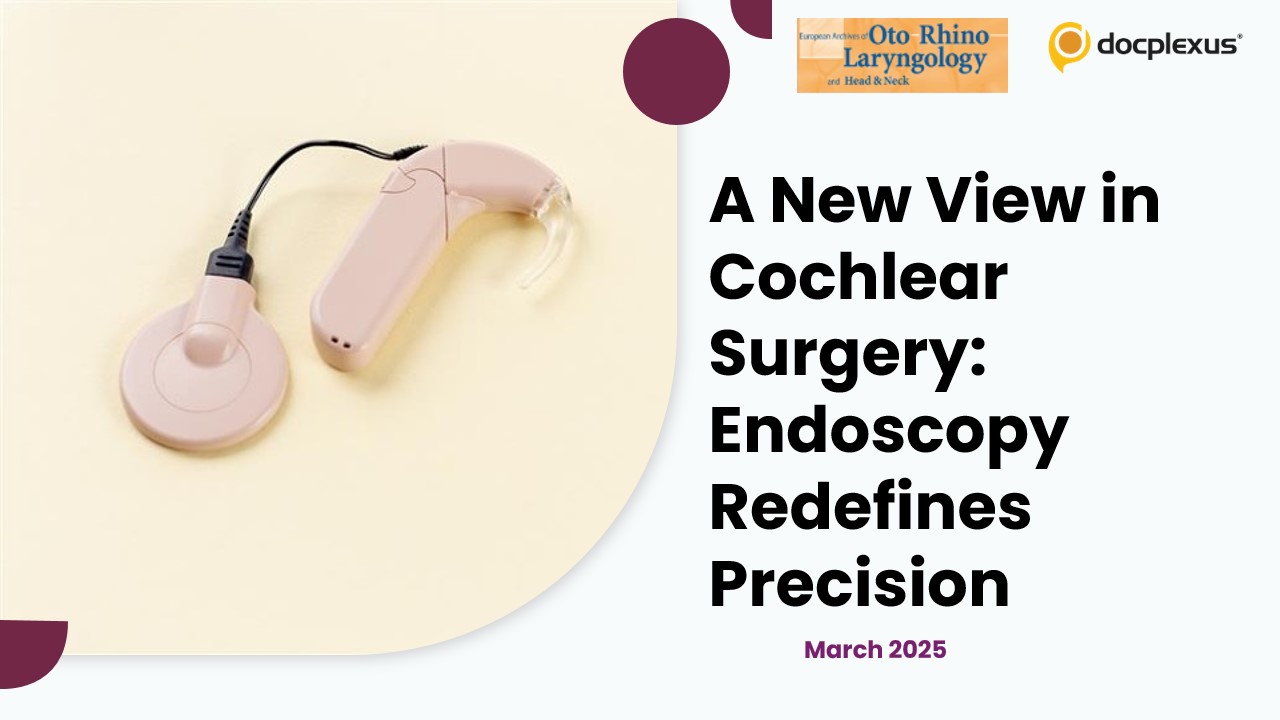
In cochlear implantation, the microscopic transmastoid posterior tympanotomy approach often limits visualization of the round window membrane—crucial for precise electrode placement and hearing preservation. This double-blind randomized controlled trial compared traditional microscopic versus endoscope-assisted cochlear implantation in patients with difficult middle ear anatomy (St Thomas IIb–III). The endoscope-assisted group achieved a significantly higher Round Window Structural Visibility Index (RSVI) score (8.44 ± 1.37 vs.
5.47 ± 2.56; p < 0.05), reflecting superior intraoperative visualization. Moreover, round window insertions were more frequent (χ² = 15.45; p < 0.05) and ECAP thresholds improved for basal and middle electrodes, suggesting better neural interface quality. This shift toward endoscopic integration could redefine surgical precision and long-term auditory outcomes.…