
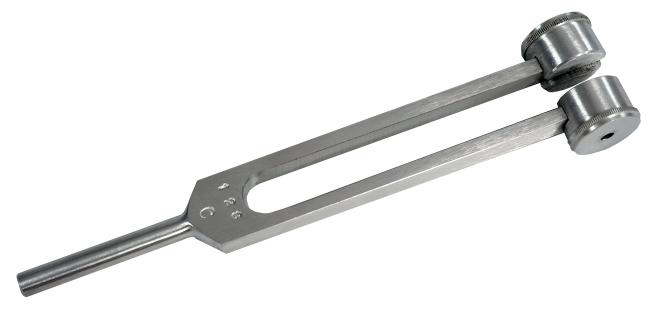
The Schwabach test The Schwabach test is a measure of the threshold of hearing by bone conduction of an unoccluded ear (relative bone conduction). It is thus the clinical equivalent of what is done in bone conduction audiometry. The test compares the patient’s ability to hear a tuning fork by bone conduction with that of a normally hearing person.
The test is usually done by placing the foot piece of a vibrating tuning fork on patient’s mastoid process and asking the patient to say when the tuning fork is no longer heard. As soon as he/she indicates that this point has been reached the foot piece of the tuning fork is transferred to the mastoid process of a normally hearing person. (Usually, the examiners consider their hearing to be normal so compare the patient’s hearing with their own hearing by bone conduction) If the observer can hear the tuning fork after the patient has ceased to…