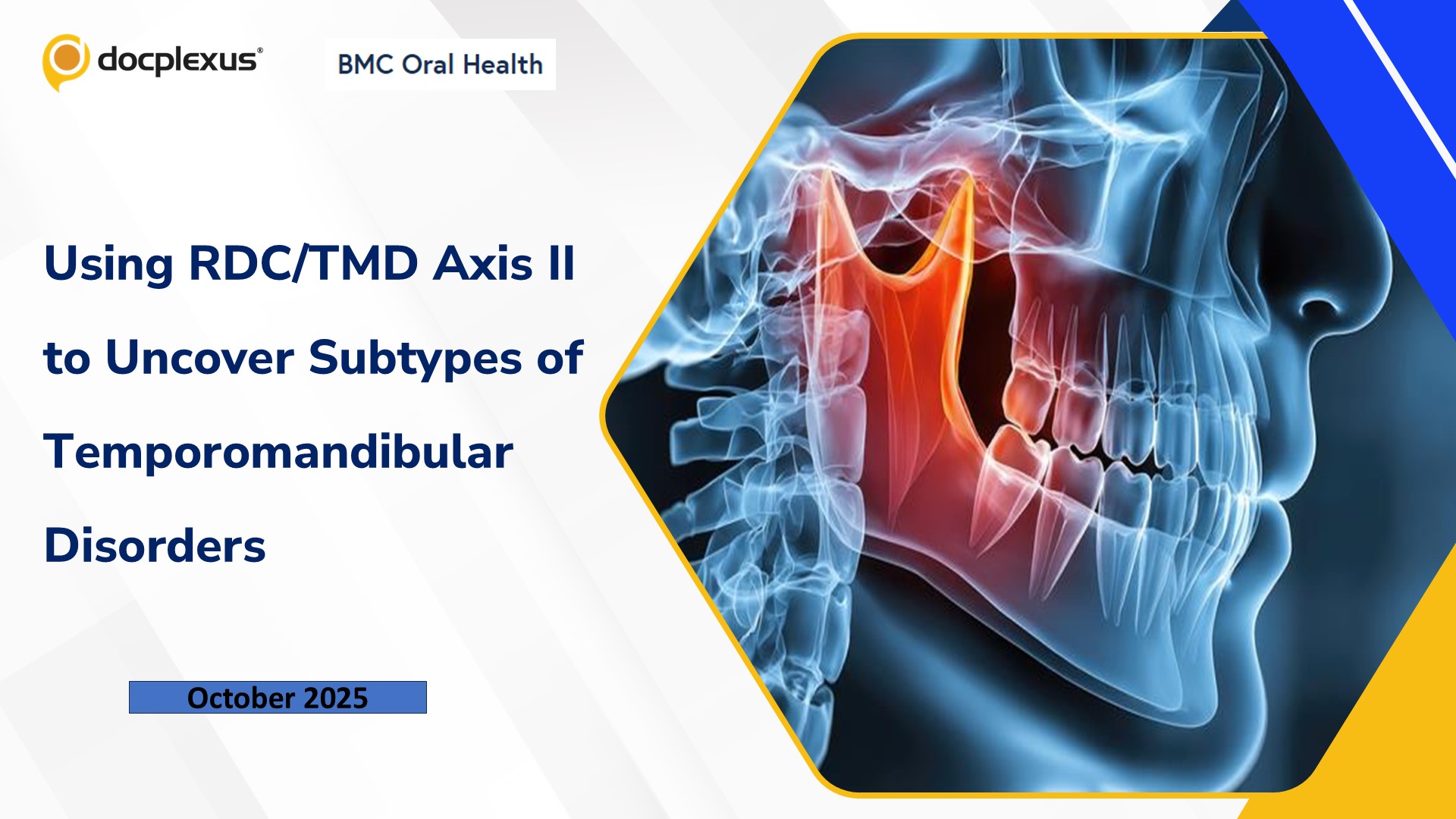
A 2025 cross-sectional study of 270 TMD patients (212 female, 58 male) evaluated psychological and pain profiles using RDC/TMD Axis II, categorized by the Okeson classification into osteoarthritis, internal derangement, myofascial pain, and local myalgia. Patients with myofascial pain showed the highest rates of depression, somatization, antidepressant use , and chronic pain, while those with internal derangement had the lowest. Smoking rates were similar across groups.
The findings suggest that subgroup-specific assessment using RDC/TMD Axis II can clarify divergent pathogenesis and guide personalized treatment strategies for TMD. To read more; Click here Which approach best supports individualized care in TMD management? Treat all TMD patients the same Use RDC/TMD Axis II to assess psychological and pain factors Focus only on structural joint findings Ignore patient-reported outcomes…