
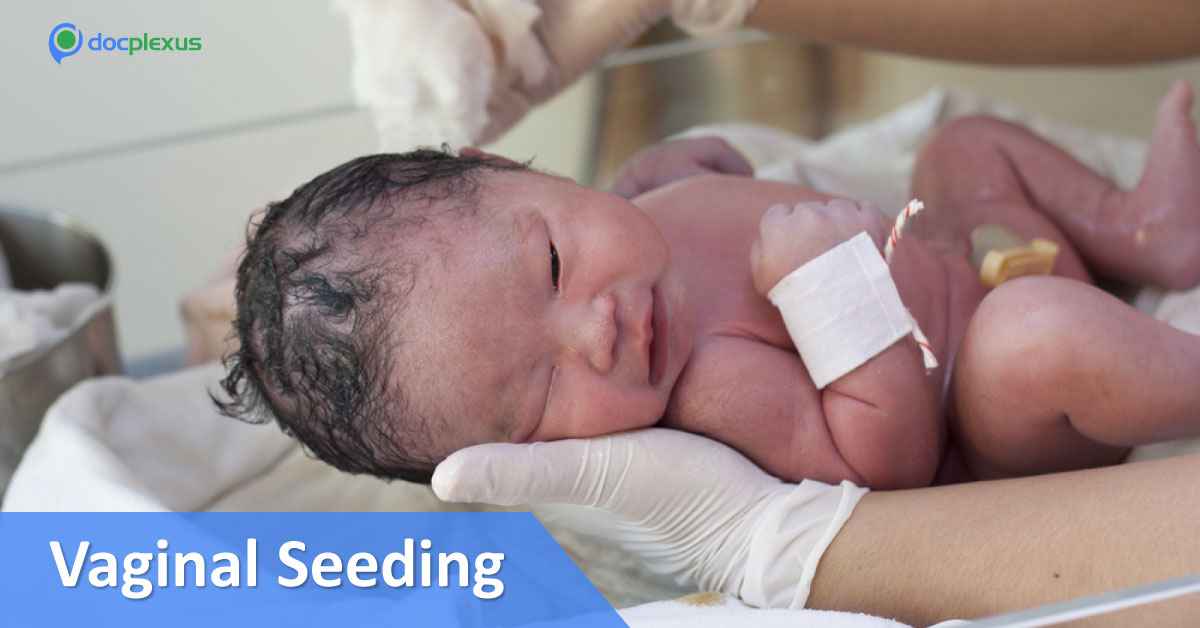
Vaginal seeding, a practice with questionable efficacy, is gaining a lot of attention recently but there is no data regarding the associated risks and benefits. In this regard, a practice advisory against vaginal seeding has been issued by The American College of Obstetricians and Gynecologists stating that vaginal seeding should not be performed until adequate data on safety and potential benefits are available. What is vaginal seeding?
Vaginal seeding refers to a practice of using gauze or a swab to transfer the vaginal flora to the mouth, nose, or skin of an infant born via cesarean delivery. Theory Behind Practice The theory behind the practice of vaginal seeding is exposing the cesarean infants to vaginal microbiota to ameliorate the increased risk of autoimmune diseases, asthma, and allergic diseases. Vaginally born infants are presumed to have the reduced risk of autoimmune…