Alcohol metabolism is often described as following pseudo-zero-order kinetics due to enzyme saturation at higher concentrations. Unlike most drugs that follow first-order kinetics, where the rate of metabolism depends on the concentration, alcohol's enzymes, like alcohol dehydrogenase, become saturated after a certain point. This leads to a constant rate of metabolism, regardless of the amount of alcohol consumed.
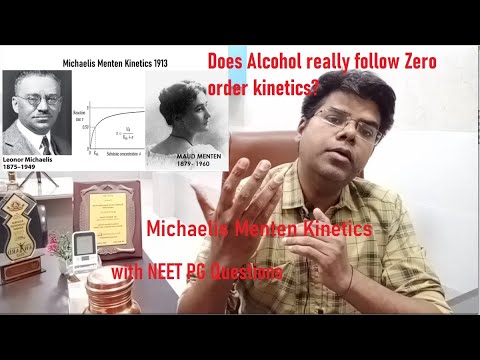
This behavior is explained by Michaelis-Menten kinetics , where the enzyme's capacity to process alcohol becomes the limiting factor. Understanding this concept is important for pharmacology, especially in the context of metabolism and drug kinetics.