
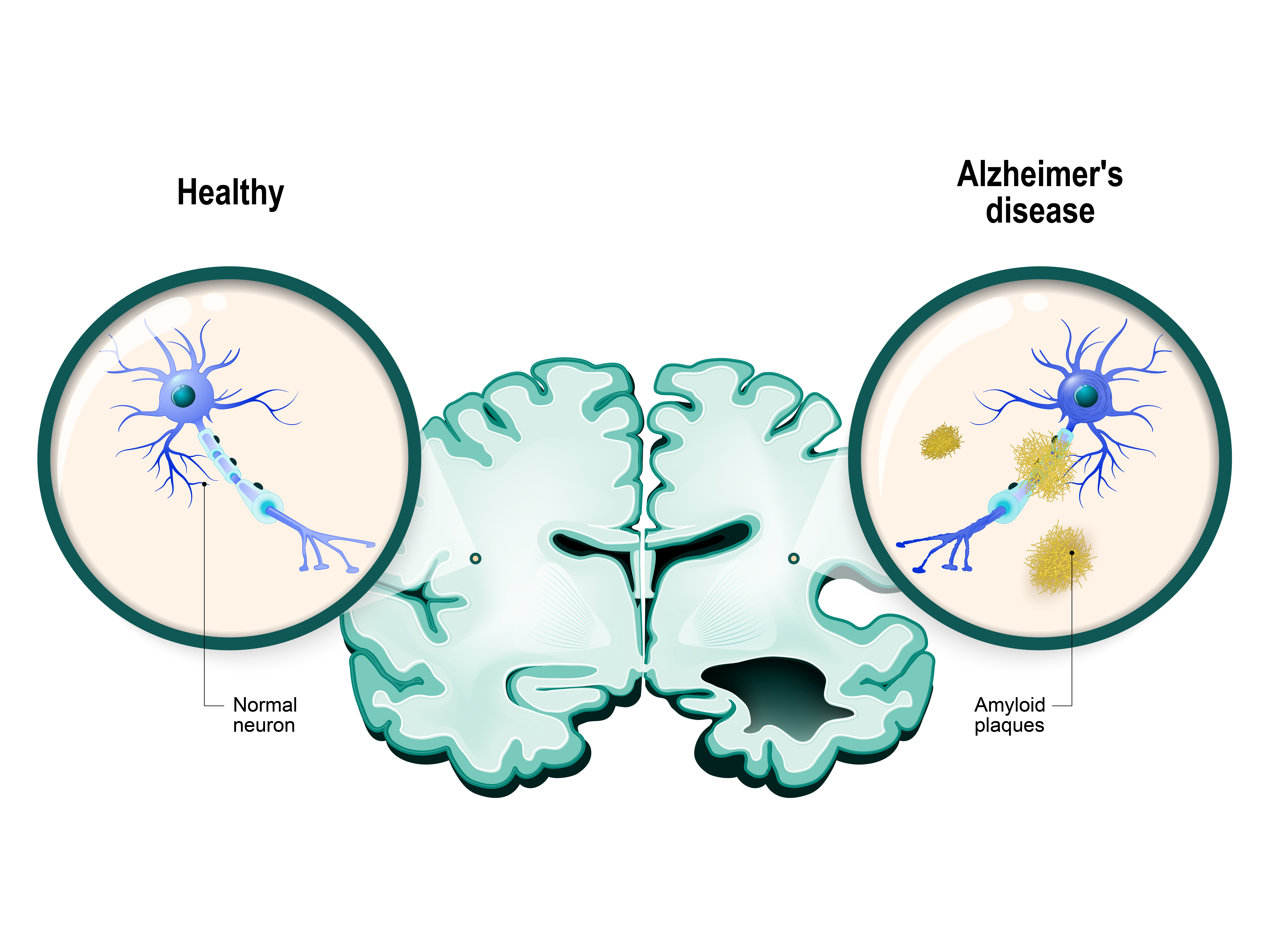
Definition:- Alzheimer's disease is the most common neurodegenerative disease, accounting for approximately, two-thirds of all cases of dementia and affecting up to 20? of individuals older than 80 years. Alzheimer's disease (AD) is progressive, leading to the irreversible loss of neurons in the cerebral cortex and hippocampus. The pathologic hallmarks of the disease are Neurofibrillary tangles, which contain the hyperphosphorylated form of the microtubular protein tau and extracellular plaques, which contain the peptide beta-amyloid.
Beta-amyloid is a cleaved form of larger protein, beta-amyloid precursor protein, by the alpha, beta, lambda secreatases. The lambda secretases cleave to ABeta42, a 42 amino acid sequence amyloid protein, which forms insoluble fibrils that accumulate in senile plaques isolated at autopsy from AD patients. In some patients with familial disease, a genetic…