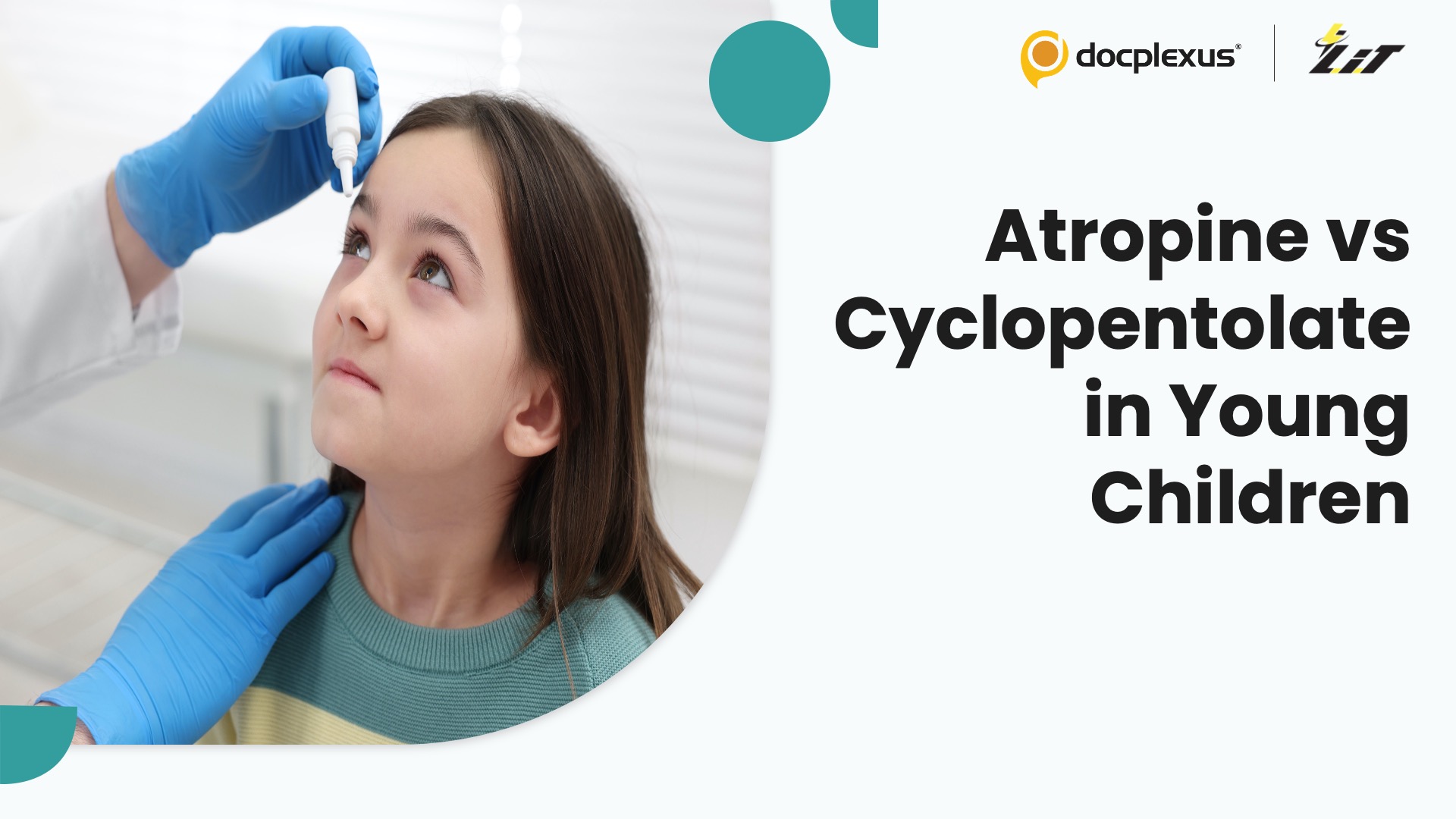
Although atropine is recognized as the strongest cycloplegic agent, its prolonged effects and potential side effects limit routine use. Cyclopentolate, with its faster onset and shorter duration, is more commonly used as an alternative. To address uncertainty regarding differences in cycloplegic outcomes between these agents, Chinese researchers compared refraction results in 1,761 preschool children aged 3 to 7 years.
The study found that atropine use was associated with less myopic spherical equivalents than cyclopentolate. The atropine group showed higher prevalence of moderate to high hyperopia (7.2% vs 2.7%) and low hyperopia (82.8% vs 74.0%), and lower prevalence of premyopia (8.7% vs 21.6%) and myopia (1.3% vs 1.8%) compared to the cyclopentolate group. These findings highlight that atropine may provide more reliable cycloplegia in preschool children, with less myopic refraction,…