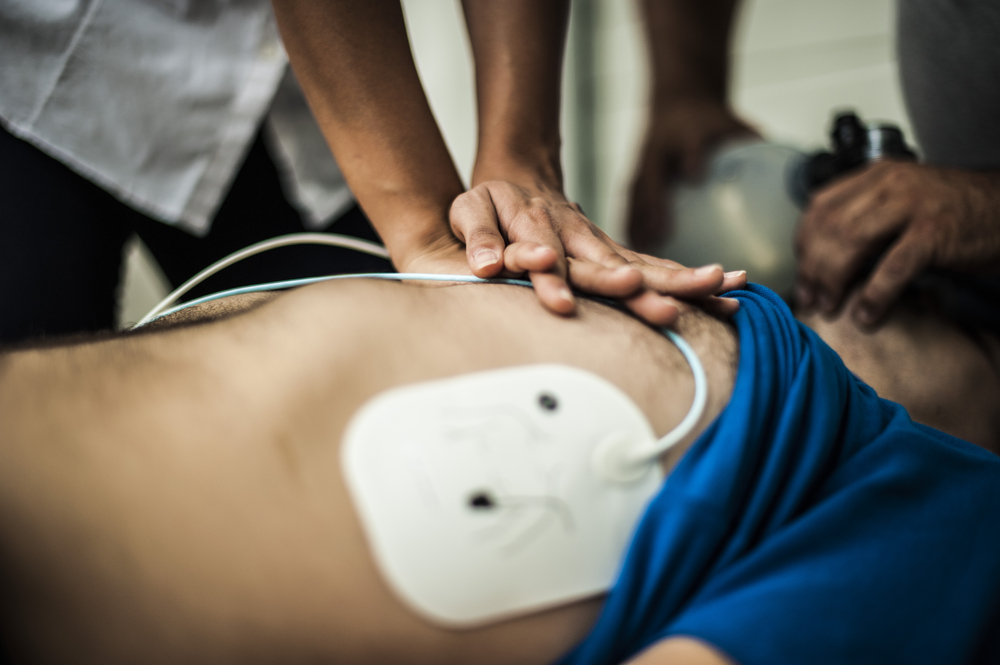
Sudden cardiac arrest (SCA) and sudden cardiac death (SCD) refer to the sudden cessation of cardiac activity with hemodynamic collapse, often due to sustained ventricular tachycardia/ventricular fibrillation. Other causes of SCA and SCD are asystole and pulseless electrical activity. This article describes the role of two antiarrhythmic drugs in persistent VF and VT in post-electrical countershock therapy for SCA. The treatment of SCA consists of emergent resuscitation followed, in survivors, by an immediate post-resuscitative care and attempted long-term prevention of recurrence using pharmacologic and nonpharmacologic interventions. In general, there are two first-line therapies of resuscitation that have been shown to be associated with improved survival: 1.
Excellent chest compressions 2. Early defibrillation. Resuscitation should focus on these two elements. This does…