
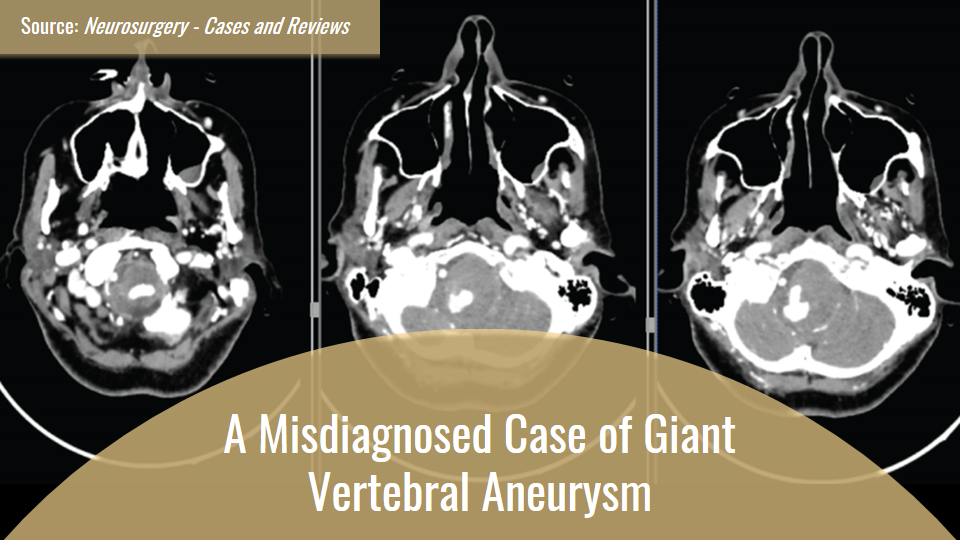
Giant intracranial aneurysms are rare and account for 5% of all known intracranial aneurysm cases. Moreover, compared to pre-circulation aneurysms, posterior circulation aneurysms are more infrequent and have a poorer prognosis. Due to the posterior fossa's location and small size, posterior circulation aneurysms most often result in cranial nerve palsies, hydrocephalus, motor impairment, and subsequent infrequent vertebral artery aneurysm, leading to vagal nerve dysfunction, conferring cough and dyspnea.
The treatment protocols for anterior circulation aneurysms, including endovascular therapy, flow diverter devices (FDD), stents, primary coiling, clipping, or bypass surgeries, can also be used to treat posterior aneurysms. However, complex cases require alternative treatments like flow diversions by pipeline embolization devices. The following case represents misdiagnosed vertebral…