
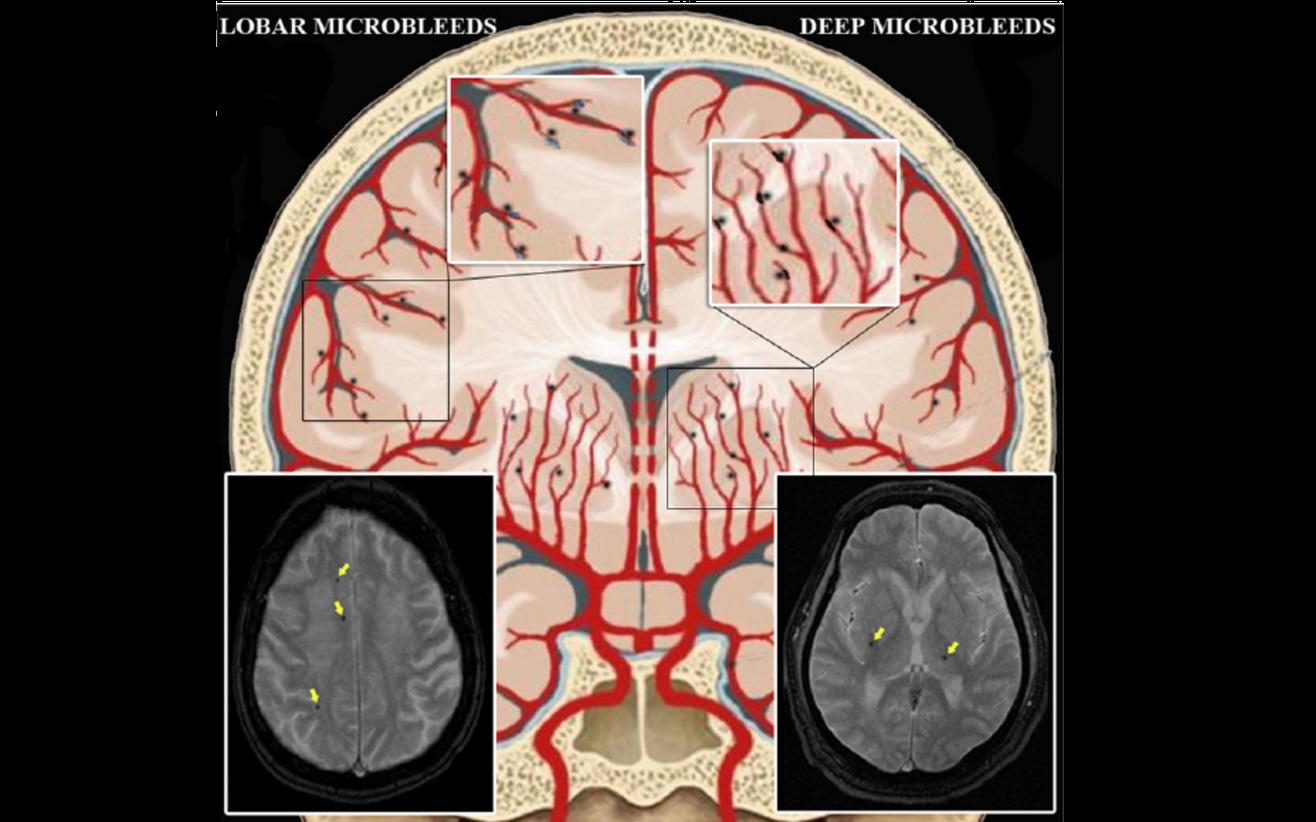
Frequently occurring in the elderly population, Cerebral Microbleeds (CMB) are MRI findings that are related to small hemosiderin foci. CMBs are potential risk factors for future transient ischemic attack (TIA) and intracerebral hemorrhage (ICH). The present article discusses the clinical relevance of CMB for antithrombotic use.
CMBs are characterized radiologically as small (generally <10mm) ovoid or rounded black signal voids on paramagnetic-sensitive MRI sequences, including T2* gradient-recalled echo weighted and susceptibility- weighted imaging. The most frequent observation is that CMBs are self-limiting regions of RBC extravasation from damaged small blood vessels. The localization of CMB predicts the nature of underlying small vessel disease: an arteriopathy related to systemic arterial hypertension and pathological alterations in small perforating arteries results in CMBs in…