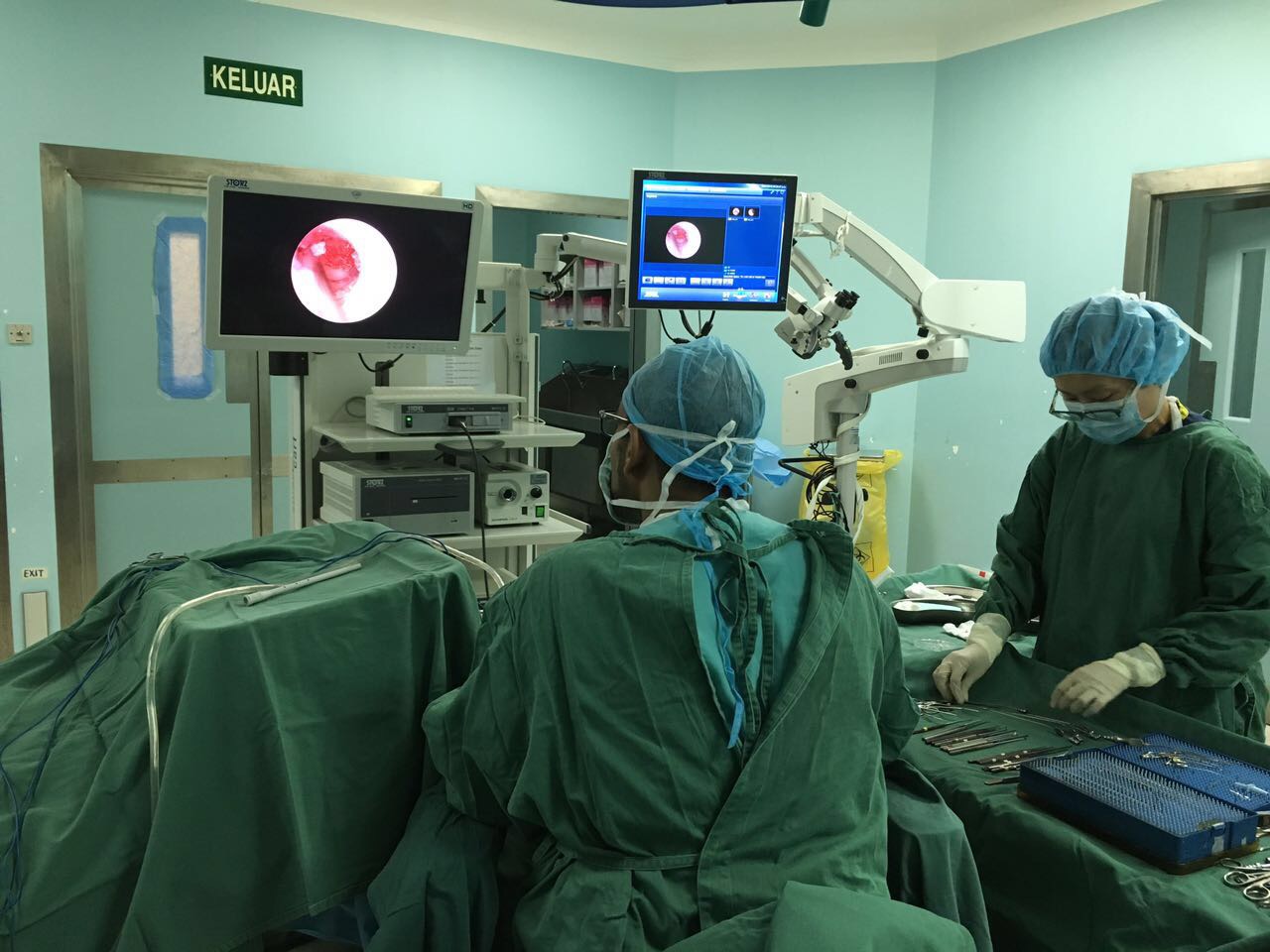
Minimally invasive surgical procedures have come to dominate most specialties and endoscopic ear surgeries have evolved over the past 2 decades to become a well recognized standardized surgical option. It has several advantages, some of the most pronounced being superior visibility of intra-tympanic structures including several hidden areas ( in comparison to the operating microscope), lesser patient morbidity, shorter hospital stay and at times lesser hospital follow-up visits in certain conditions.The common disadvantages include single workable hand for instrumentation, need to complement with the microscope in certain extensive/infiltrative types of cholesteatomas and individual variability in operative skills learning curve for beginners.
The greatest to benefit are patients with the non-infiltrative type of cholesteatomas who would traditionally end up with a Canal Wall Down…