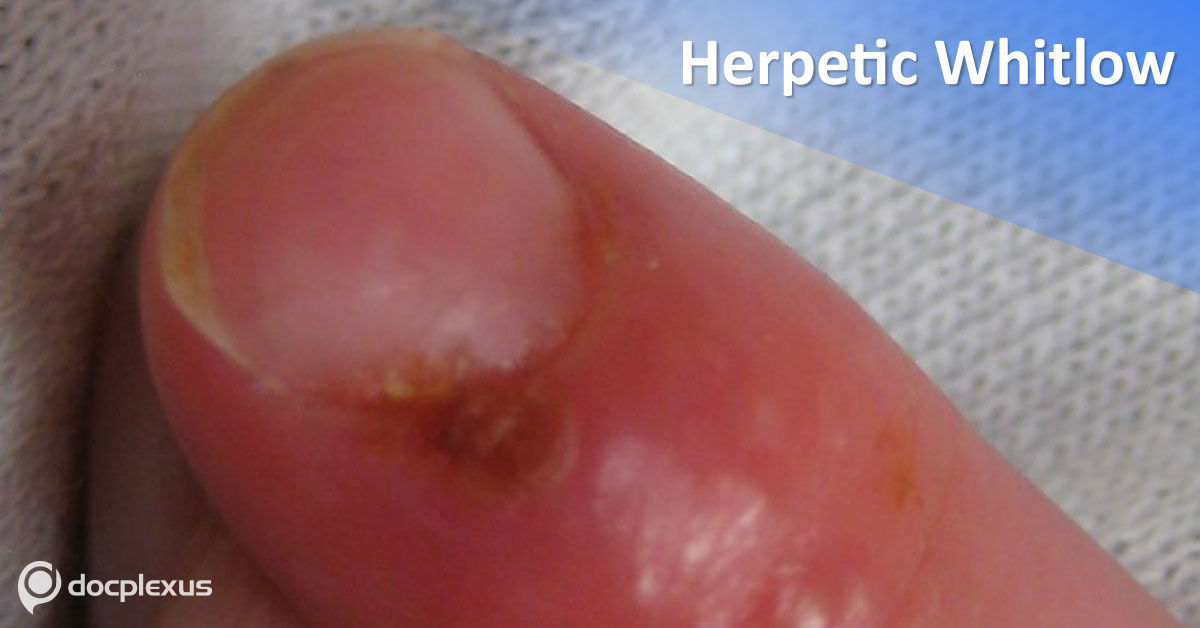
Herpetic whitlow is an intensely painful infection of the hand involving 1 or more fingers that typically affects the terminal phalanx. Herpes simplex virus is the causative agent in most of the cases of herpetic whitlow. This article discusses the effective approaches for the prevention and management of herpetic whitlow. The annual incidence of herpetic whitlow is estimated at 2.4-5.0 cases per 100,000 population.
Morbidity, in the case of herpetic whitlow, is related primarily to bacterial superinfection or to iatrogenic complications due to a misguided incision and drainage resulting from an incorrect diagnosis of the infection as a bacterial paronychia. These complications may include delayed resolution, increased incidence of bacterial superinfection, and, rarely, systemic spread and the development of herpes encephalitis. Clinical Findings Often patients present with complaints…