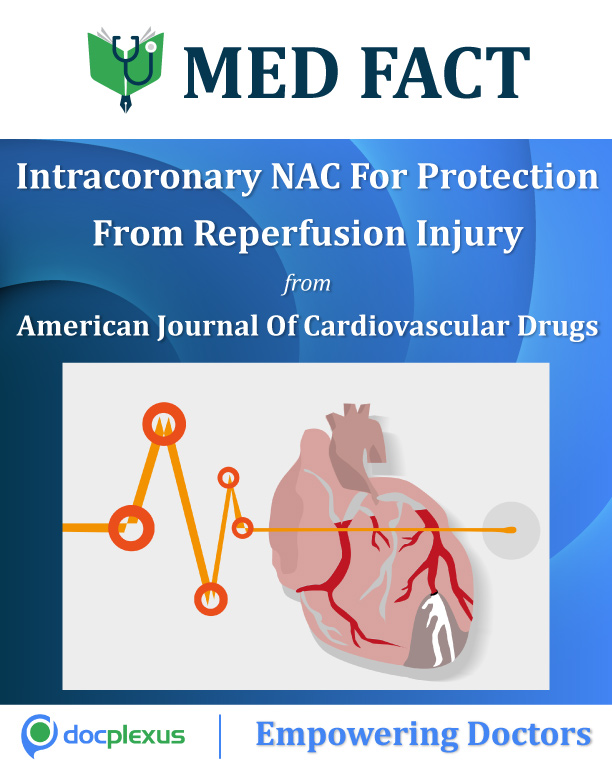
Synopsis Oxidative stress plays a principal role in myocardial damage following ischemia/ reperfusion events after percutaneous coronary intervention (PCI). Recent studies have shown that the antioxidant properties of N-Acetylcysteine (NAC) may have cardioprotective effects. The present study investigates the impact of high dose NAC on ischemia/ reperfusion injury. This week’s “ MED FACT ” discusses a randomized controlled trial from American Journal of Cardiovascular Drugs, “ Protection from Reperfusion Injury with Intracoronary N-Acetylcysteine in Patients with STEMI Undergoing Primary Percutaneous Coronary Intervention in a Cardiac Tertiary Center ”. Authors: Y.
Nozari et. al. Key Takeaways High dose of NAC in percutaneous coronary intervention improves myocardial reperfusion markers and coronary blood flow. Objective: The present study investigates the effects of high-dose NAC on…