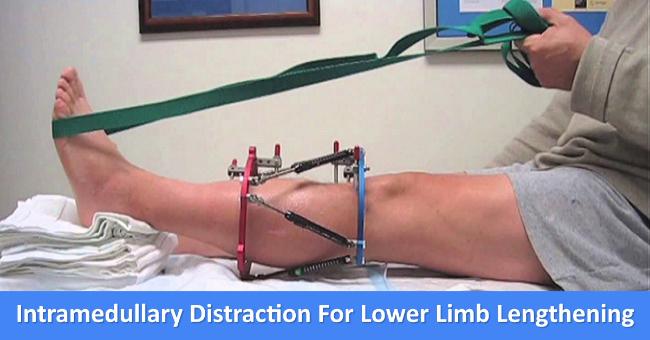
Current evidence on the safety and efficacy of “ Intramedullary distraction for lower limb lengthening ” is for efficacy in lengthening the femur. Length deficiency can occur in one or both legs, and may be acquired (for example, secondary to trauma or infection) or, more rarely, be congenital (for example, due to hypoplasia or dysplasia). The femur, tibia or both can be involved. Deficiency or inequality in leg length can result in a limp and may limit functional ability.
Lengthening of the shorter leg can be attempted using external fixation devices. However, these devices are associated with significant morbidity, including infection of the pin tracts, pain, hip and knee subluxation or dislocation, and angulation deformity of the bone. External fixation devices may also be impractical or aesthetically unacceptable to some patients. Intramedullary distraction devices are similar to…