
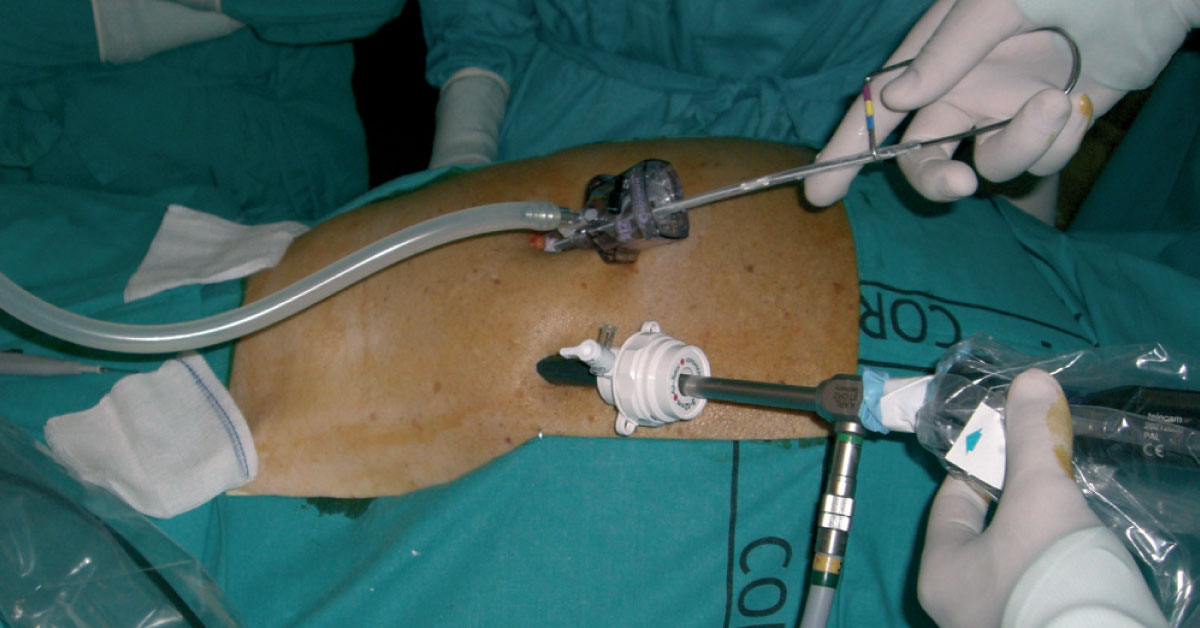
Peritoneal dialysis is an alternative to hemodialysis and is used to treat patients with the end-stage renal disease. It involves infusing fluid into the peritoneal cavity via a catheter and leaving it there for sufficient time to allow metabolic waste products to diffuse through the peritoneal membrane into the dialysis fluid, which is then drained away. A peritoneal dialysis catheter is conventionally inserted through a small incision in the abdomen, under local or general anesthesia. The catheter is directed towards the pelvis, which is the best place for the tip to lie. The catheter can also be placed using a percutaneous technique.
Laparoscopic insertion of a peritoneal dialysis catheter is usually performed under general anesthesia. The abdomen is insufflated and several small incisions are made. The tip of the catheter is advanced into the pelvis and may be sutured in place. The…