
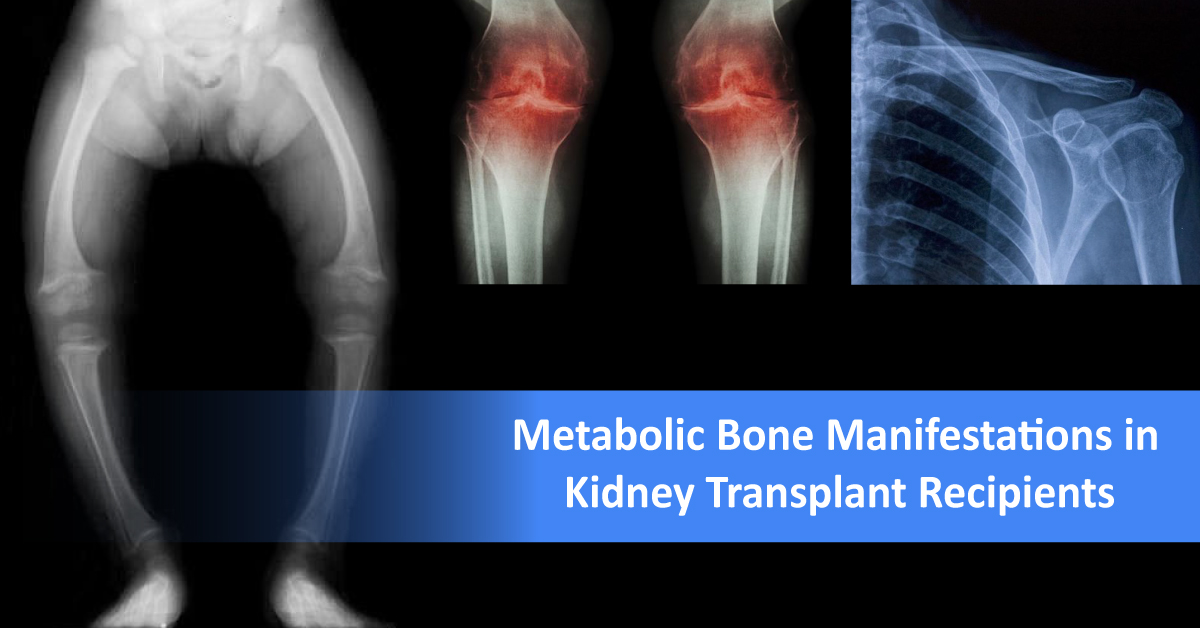
Renal transplant subjects are considered at risk for the development of metabolic bone disorders because of complex pathophysiology and heterogeneous histology. Rapid bone loss immediately after transplant can greatly increase the risk of bone fracture. Thus, this article describes metabolic bone disorders and approaches to improve the bone quality in order to decrease the rate of bone fractures in kidney transplant recipients.
Metabolic disorders include a bunch of certain clinical expressions associated with metabolic and hemodynamic modifications. The affected patients may manifold various risk factors for bone loss, hypogonadism, persistent hyperparathyroidism (HPT), poor allograft function, metabolic acidosis, hypophosphatemia, vitamin D deficiency, aging, immobility and chronic disease. The clinical management of this condition needs an inclusive approach in evaluating the…