
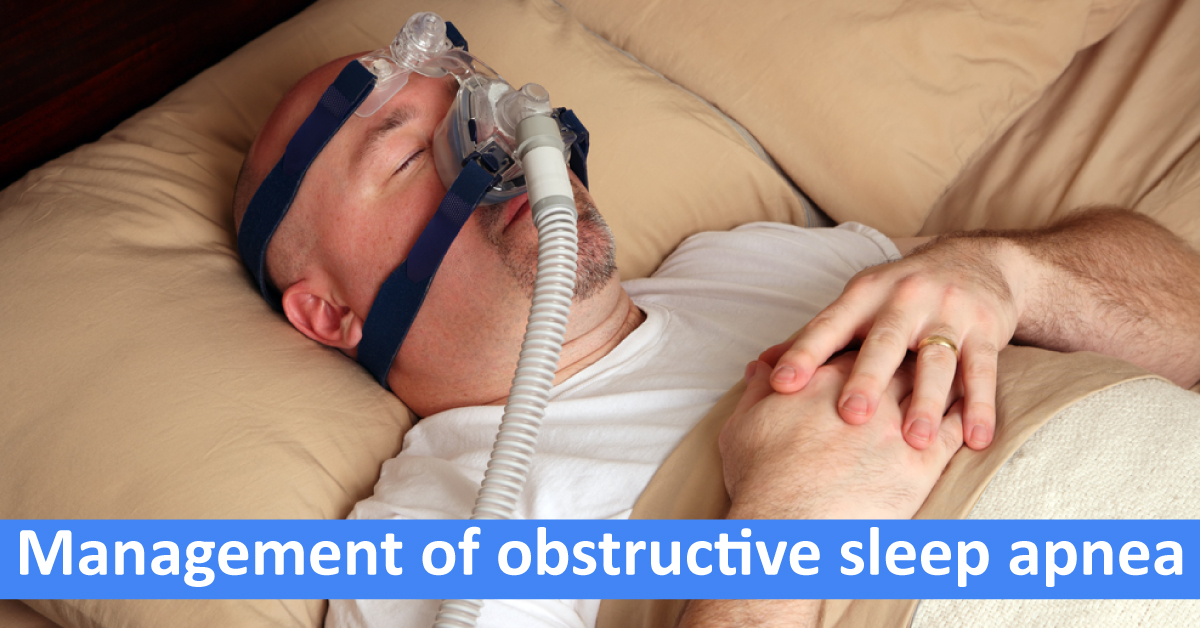
Positive airway pressure therapy is the mainstay of therapy for adults with obstructive sleep apnea (OSA). The mechanism of continuous positive airway pressure (CPAP) involves maintenance of a positive pharyngeal transmural pressure so that the intraluminal pressure exceeds the surrounding pressure and stabilizes the upper airway through increased end-expiratory lung volume. As a result, respiratory events due to upper airway collapse (eg, apneas, hypopneas) are prevented.
The American Academy of Sleep Medicine (AASM) recommends offering positive airway pressure therapy to all patients who have been diagnosed with OSA. OSA is defined as either an obstructive respiratory disturbance index (RDI) ≥15 events per hour with or without symptoms, or an obstructive RDI between 5 and 14 events per hour that is accompanied by any of the following: sleepiness, nonrestorative sleep, fatigue, or…