
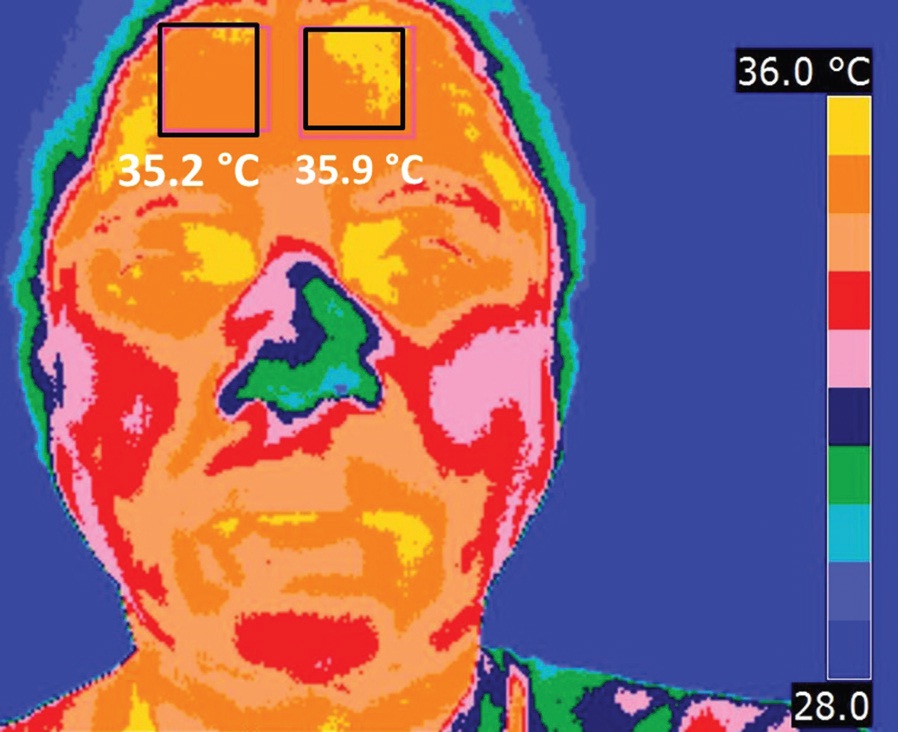
Vascular dysfunction is associated with onset of cardiovascular disease (CVD). Its effect is reflected as temperature change on the skin. The aim of this work was to test the potential of thermal imaging as cost effective screening tool for prediction of CVD. Thermal imaging of various parts of the subject (N = 80, male/female =44/36, aged 25-75 years) was done using noncontact infrared (IR) camera.
In each subject, total cholesterol (TC; mg/dl) and high‑density lipoprotein (HDL, mg/dl) were measured according to standard biochemical analysis. Based on National Cholesterol Education Program ATP III criteria, subject with known CVD (N = 16) and age‑ and sex‑ matched normal subjects (N = 21) were included in the study. The average surface temperature of various parts from head to toe was calculated and statisticalanalysis was performed between the groups. In the total population (N = 37),…