
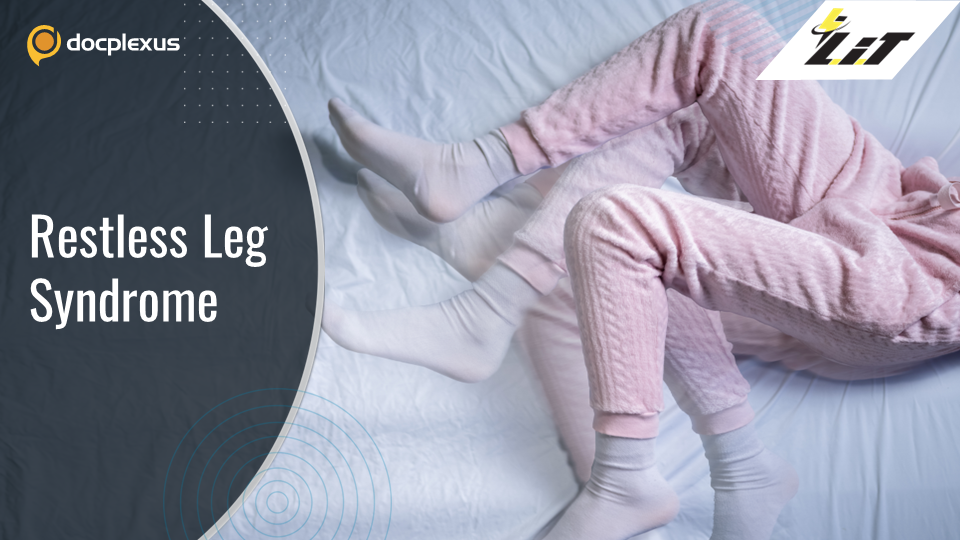
Restless leg syndrome (RLS), also known as Willis-Ekbom disease , affects 5% of the world’s population. It is categorized as a sleep-related movement disorder of the legs , although this categorization is debatable as there are numerous reports of daytime occurrence too.
The pathophysiology is largely attributed to dopaminergic dysfunction and abnormal CNS excitability ( Figure 1 ). The five diagnostic criteria for RLS are “ URGE ” and the absence of underlying systemic condition: U rge to move the legs R est-induced condition G ets better with activity E vening and night accentuation of the condition RLS is primarily classified into three types: Primary: RLS has an autosomal dominant inheritance pattern Idiopathic: RLS of unknown etiology RLS associated with other conditions: End-stage renal disease, pregnancy, diabetes mellitus, Parkinson’s disease, and peripheral neuropathy…

