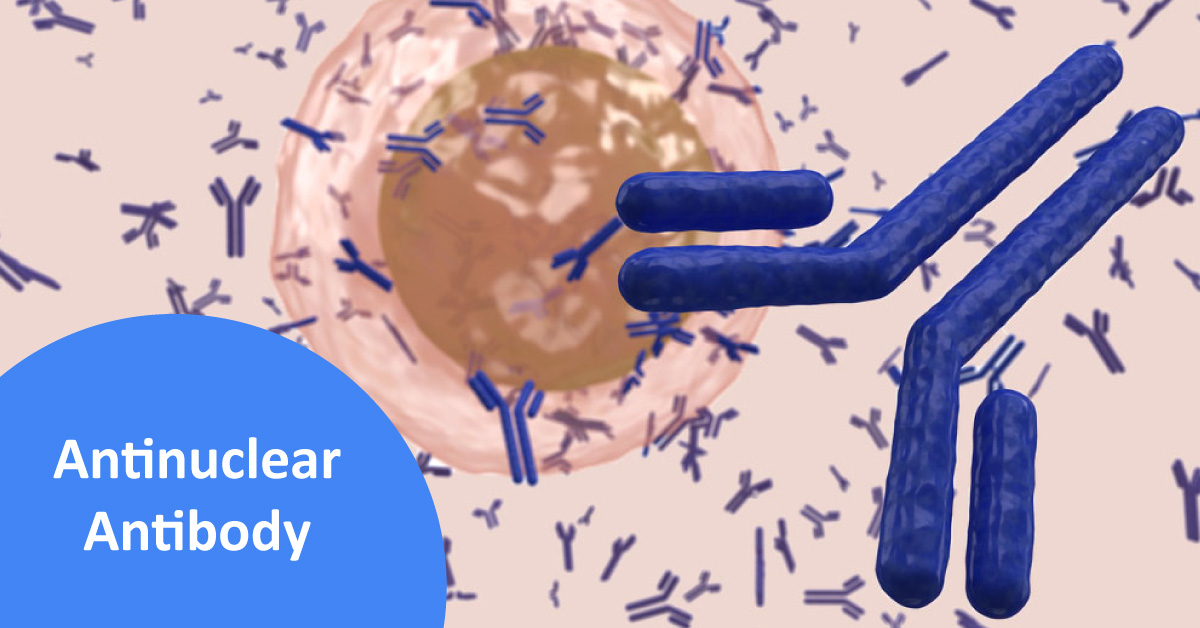
When an antibody recognises the foreign proteins of an infectious organism, it recruits other proteins and cells to fight off the infection. This cascade of attack is called inflammation. Sometimes these antibodies make a mistake, identifying normal, naturally-occurring proteins in our bodies as being “foreign” and dangerous. When these antibodies make incorrect calls, identifying a naturally-occurring protein (or self-protein) as foreign, they are called autoantibodies. Autoantibodies start the cascade of inflammation, causing the body to attack itself.
The antibodies that target “normal” proteins within the nucleus of a cell are called antinuclear antibodies (ANA). Most of us have autoantibodies, but typically in small amounts. The presence of a lot of autoantibodies or ANAs can indicate an autoimmune disease. ANAs could signal the body to begin attacking itself which can lead to…