
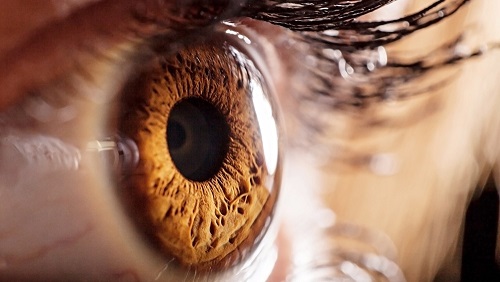
The human eyeball is kind of incredible, being able to see millions and millions of colors, automatically adjust to light conditions, and, in camera terms, it contains about 50 f-stops of capability. Light enters our eyes and falls on photoreceptive proteins in our retina (the rods and the cones). From there, information is sent to the brain via the ganglion and bipolar cells behind the rods and cones. Your brain adjusts the changing information from your eyes — like when you’re using color filters (tinted sunglasses) — almost imperceptibly.
In degenerative diseases of the eye like retinitis pigmentosa or macular degeneration, the rods and cones are destroyed, leaving one in four sufferers legally blind. However, the messenger cells stay mainly intact. That’s what scientists are hoping will make experiments they’ve been doing with channelrhodopsin-2 — a light-sensitive protein found in…