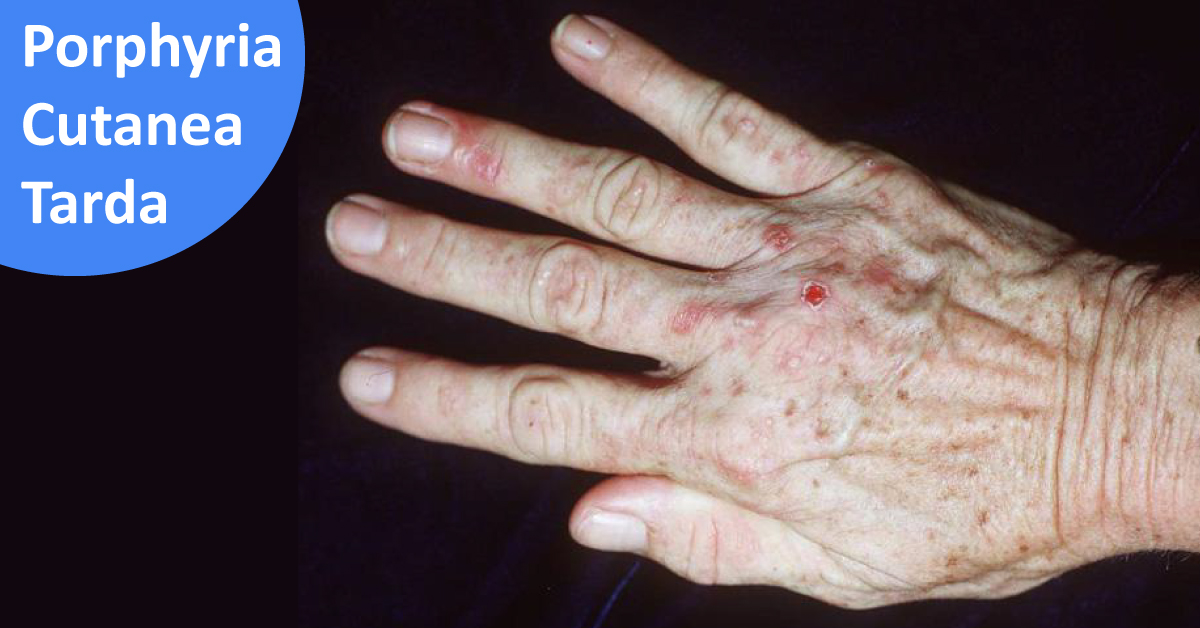
Approximately 80% of all cases of porphyria cutanea tarda are acquired; 20% are familial, although the ratio varies among different geographic regions and ethnic groups. This article is an overview of Porphyria Cutanea Tarda which is one of the rare diseases in Indian population. General Features: Porphyria cutanea tarda (PCT) is the most common human porphyria due to acquired deficient activity of hepatic uroporphyrinogen decarboxylase (UROD), the fifth enzyme in the heme biosynthetic pathway. UROD is present in hepatocytes and red blood cells.
Iron is a major co-factor in the generation of uroporphomethane, which inhibits UROD. Familial porphyria cutanea tarda most often arise from an autosomal dominant inheritance of a single mutation in the UROD gene. A rare recessive familial type of porphyria cutanea tarda in which both UROD alleles are mutated is termed hepato- erythropoietic…