
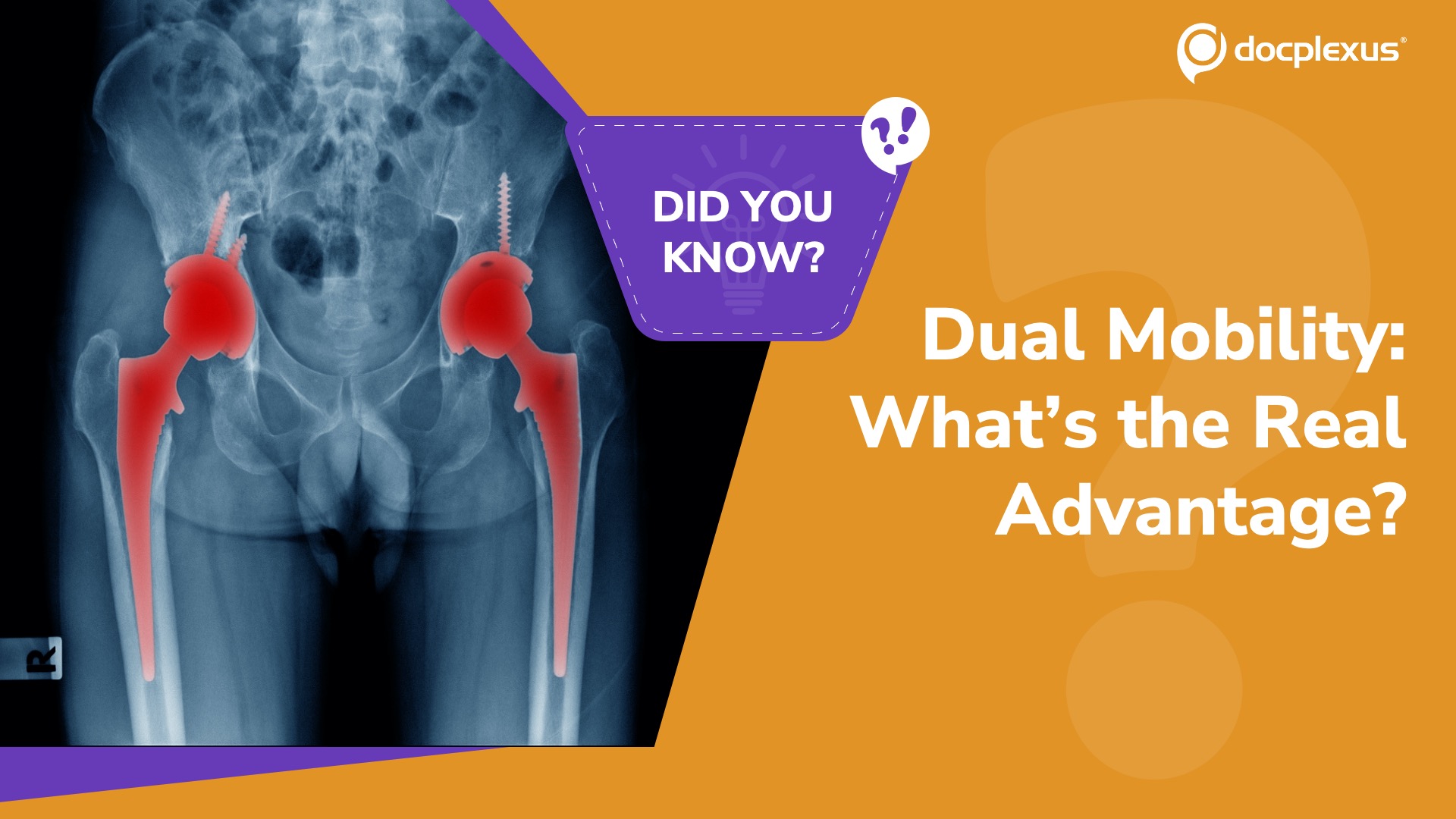
Dual mobility (DM) hip implants employ a dual-articulation construct consisting of a primary articulation between the femoral head and polyethylene liner and a secondary articulation between the liner and the metal acetabular shell. A third articulation may occur at the femoral neck–liner interface under extreme ranges of motion. This configuration modifies hip kinematics, load transfer, and impingement behavior compared with standard and constrained acetabular designs.
Biomechanical and finite element studies demonstrate that DM constructs differ from conventional implants in terms of stability, impingement patterns, and torque generation at the implant–bone interface, particularly in high-risk and revision total hip arthroplasty. Test your understanding of dual mobility biomechanics with this quick, clinically relevant question. (Scroll down to answer the question) Reference : Indian…