
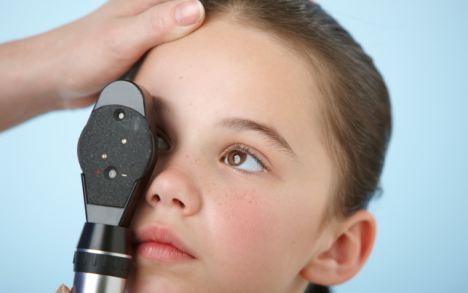
The most common cause of vision problems in children, popularly known as the "lazy eye", may actually be physical manifestation of a brain disorder linked to changes in its connection to the weaker eye, a new study says. Lazy eye - amblyopia - is a condition in children when vision does not develop properly in one eye. "Most often in amblyopia patients, one eye is better at focusing," said one of the researchers Bas Rokers, psychology professor at University of Wisconsin-Madison in the US. "The brain prefers the information from that eye, and pushes down the signal coming from the other, 'lazy' eye.
In a way, it is better to think of the better eye as a bully, rather than the poorer eye as lazy," Rokers pointed out. As the brain develops its preference for the dominant eye's input, it alters its connections to the weaker eye, the study said. "If you continually have that bullying…