
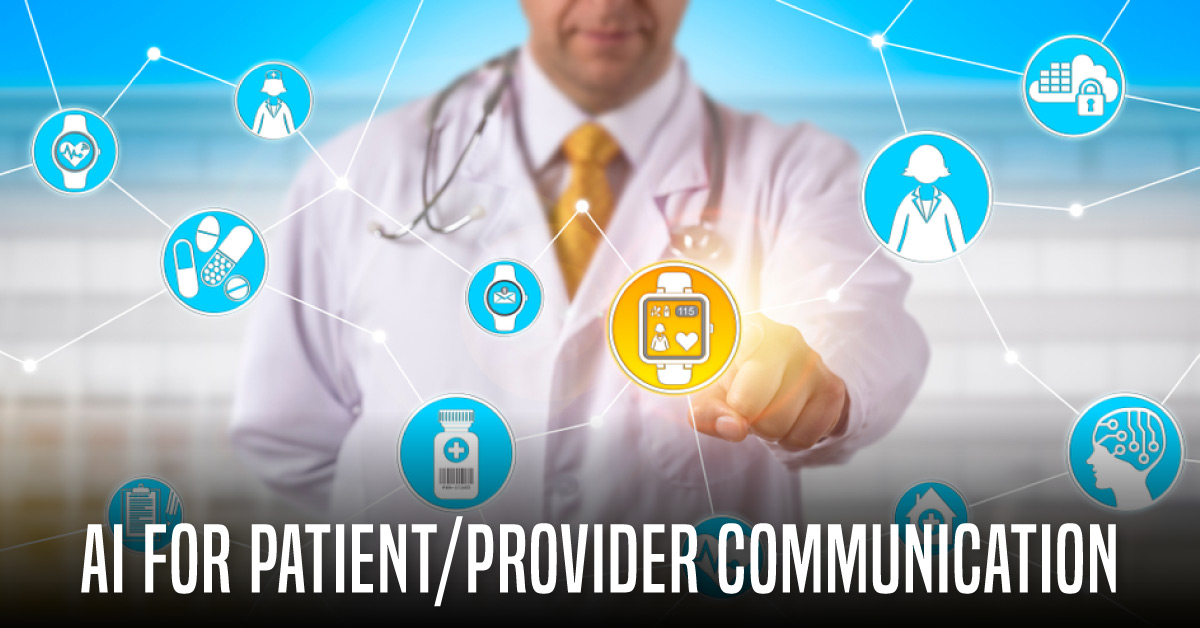
Medical practice includes complex communication between the doctors and the patients and their families. These communications can be more stressful for healthcare providers and receivers, especially in terminally ill patients, end-of-life care, and other such decisions. To improve the patient/provider communication, researchers have explored the strategy of using artificial intelligence (AI). It can potentially revolutionize medical communications by offering clinicians personalized and detailed assessment of their skills of speech, assisting the doctors to efficiently council the patients.
This type of AI has been claimed to analyze various aspects of the patient-doctor conversation, such as understanding of words and phrases, time spent, vocal pitch and energy, etc. In turn, the AI can provide feedback to clinicians to develop effective communication towards their patients. Source:…