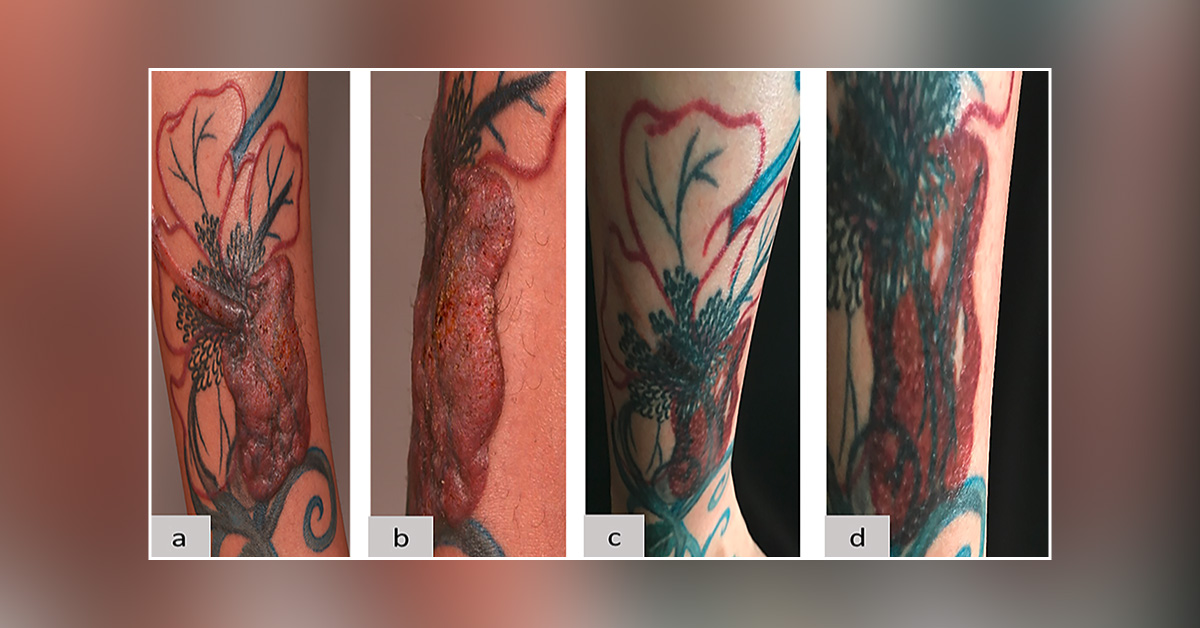
Cutaneous reactions after a tattoo are common and can occur in response to exogenous pigment deposition. The pseudolymphomatous reaction is a benign reactive proliferation of lymphocytes. However, the occurrence of pseudolymphomatous reaction as a secondary adverse effect of tattooing is uncommon. This interesting case describes the clinical, histological, and molecular aspects of a rare pseudolymphomatous reaction secondary to the usage of red ink for the tattoo.
A 33-year-old woman presented to a dermatologist with an itchy, livid red, massive infiltrated tumor on her right lower extremity. The patient had undergone a tattooing procedure nine months ago, following which the tumor developed. The tumor was sharply demarcated and within her tattoo's red part. Biopsy results A histopathological examination of the lesion revealed pronounced pseudoepitheliomatous hyperplasia with…