
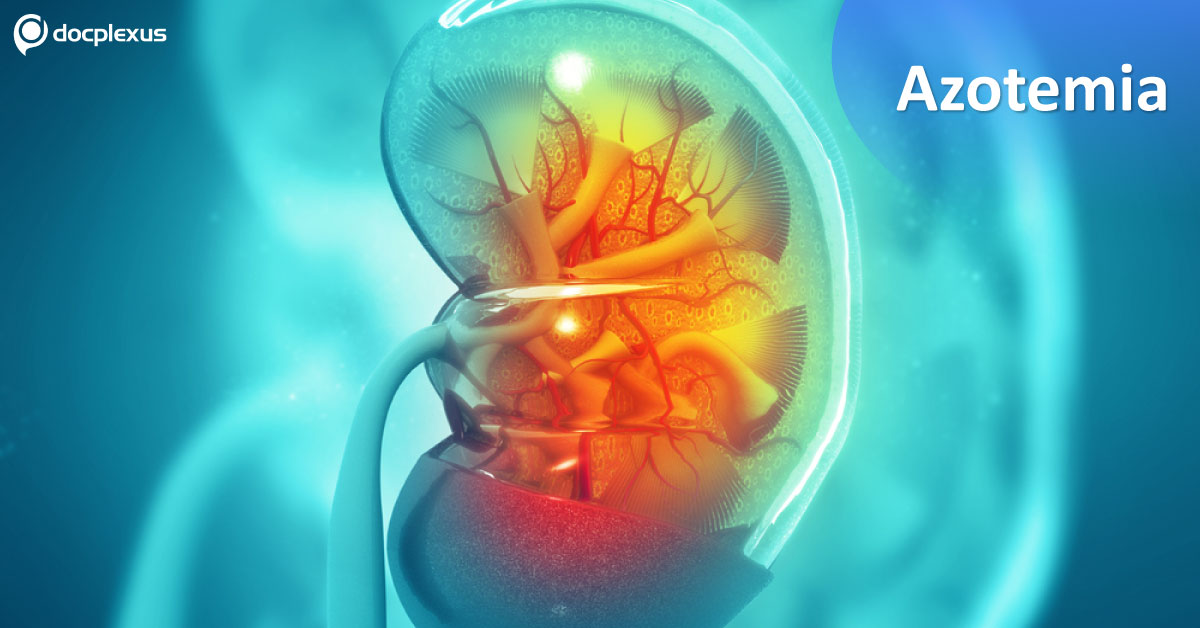
Azotemia is an elevation of blood urea nitrogen and serum creatinine levels. It is usually the result of impaired kidney function that prevents it from filtering the blood correctly. This article gives information about different types of azotemia and their management. Azotemia is a medical condition characterized by abnormally high levels of nitrogen-containing compounds in the blood.
It is largely related to insufficient or dysfunctional filtering of blood by the kidneys which can lead to uremia if not controlled. There are three pathophysiologic states in azotemia, as follows: Prerenal azotemia Prerenal azotemia refers to elevations in blood urea nitrogen (BUN) and creatinine levels resulting from problems in the systemic circulation that decrease flow to the kidneys. In prerenal azotemia, decreased renal flow stimulates salt and water retention to restore volume and pressure. It is…