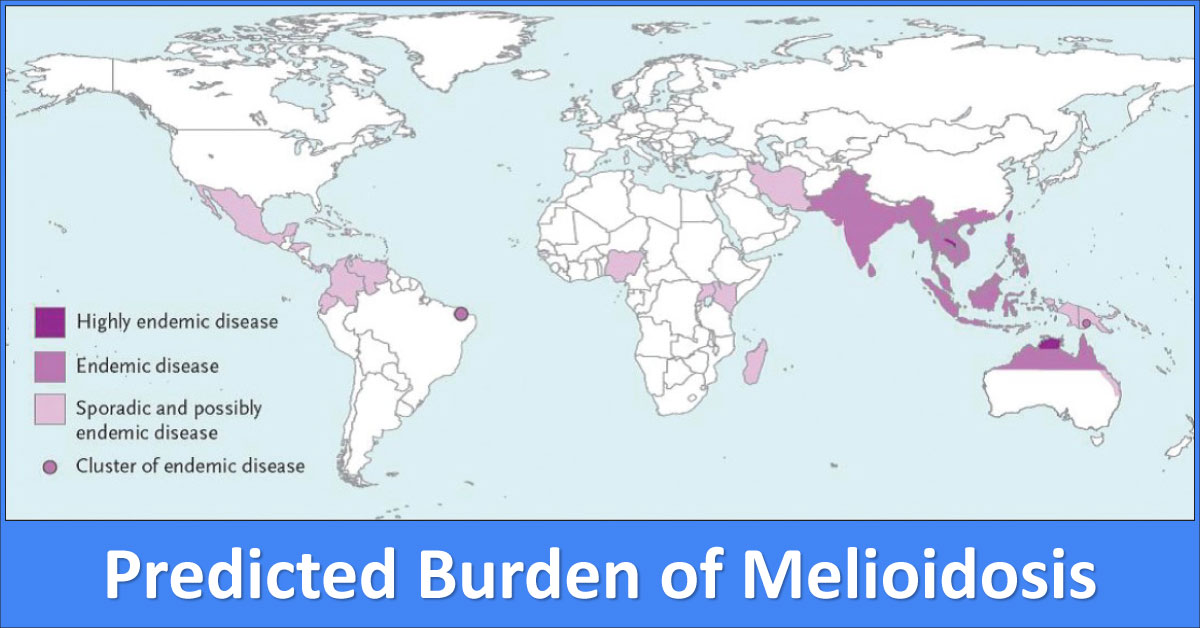
In the coming decades, melioidosis will increasingly afflict travelers throughout many global regions. Clinicians managing travelers returning from the subtropics or tropics with severe pneumonia or septicemia should consider acute melioidosis as a differential diagnosis. Patients with open skin wounds, diabetes, or chronic renal disease are at higher risk for melioidosis and should avoid direct contact with soil and standing water in endemic regions. Current article summarizes the clinical impact of melioidosis.
Burkholderia pseudomallei (a gram-negative bacterium) is the major causative agent of melioidosis, which is increasingly being recognized in several regions of the globe. This bacterium originates in muddy water as well as humid soil and is prevalent in many tropical countries. Melioidosis is an emerging infection especially in rural Indian males, with diabetes and alcoholism…