
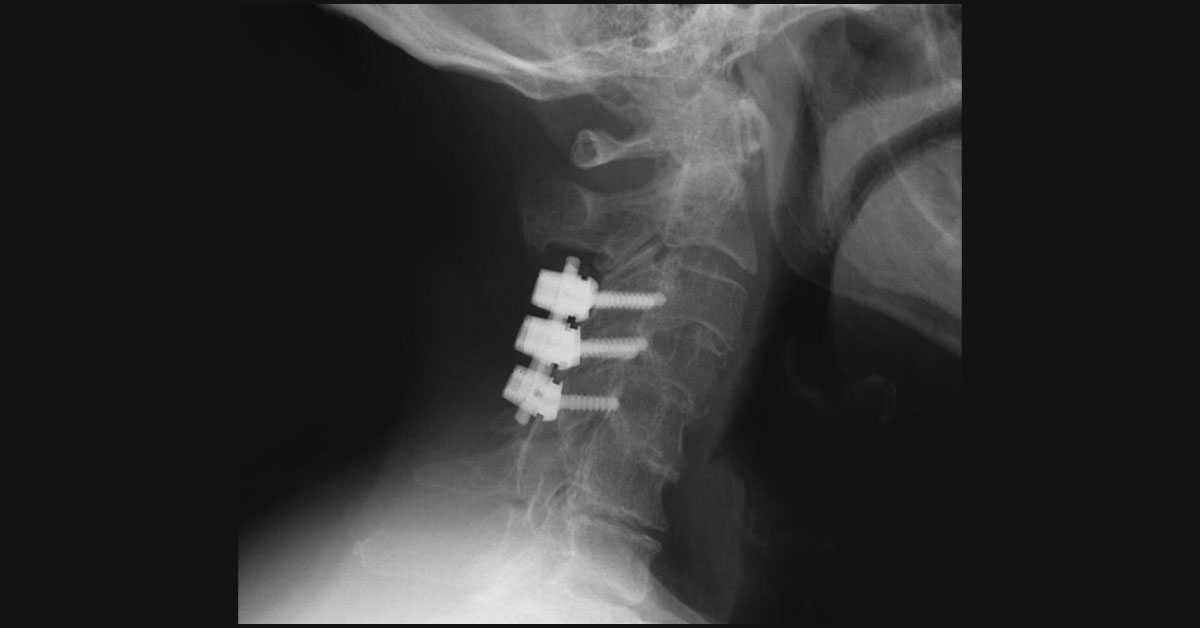
Atlantoaxial instability (excessive movement between the first and second cervical vertebrae) can be caused by trauma, malignancy and inflammatory or congenital defects. It can present with local pain, but if the spinal cord is compressed it can cause clumsiness, lack of coordination, difficulty walking and, rarely, paralysis or death. Treatment is by stabilization of the C1 (atlas) on to the C2 (axial) vertebra. Traditional methods of atlantoaxial fusion involve using wires and bone grafts, but these require external support in the postoperative period, including halo devices.
Methods of rigid fixation with trans-articular screws between C1 and C2 have been described. These do not require external fixation but are not appropriate for every patient. Under general anesthesia, the patient is placed in the prone position and standard posterior exposure of the cervical spine is performed.…