
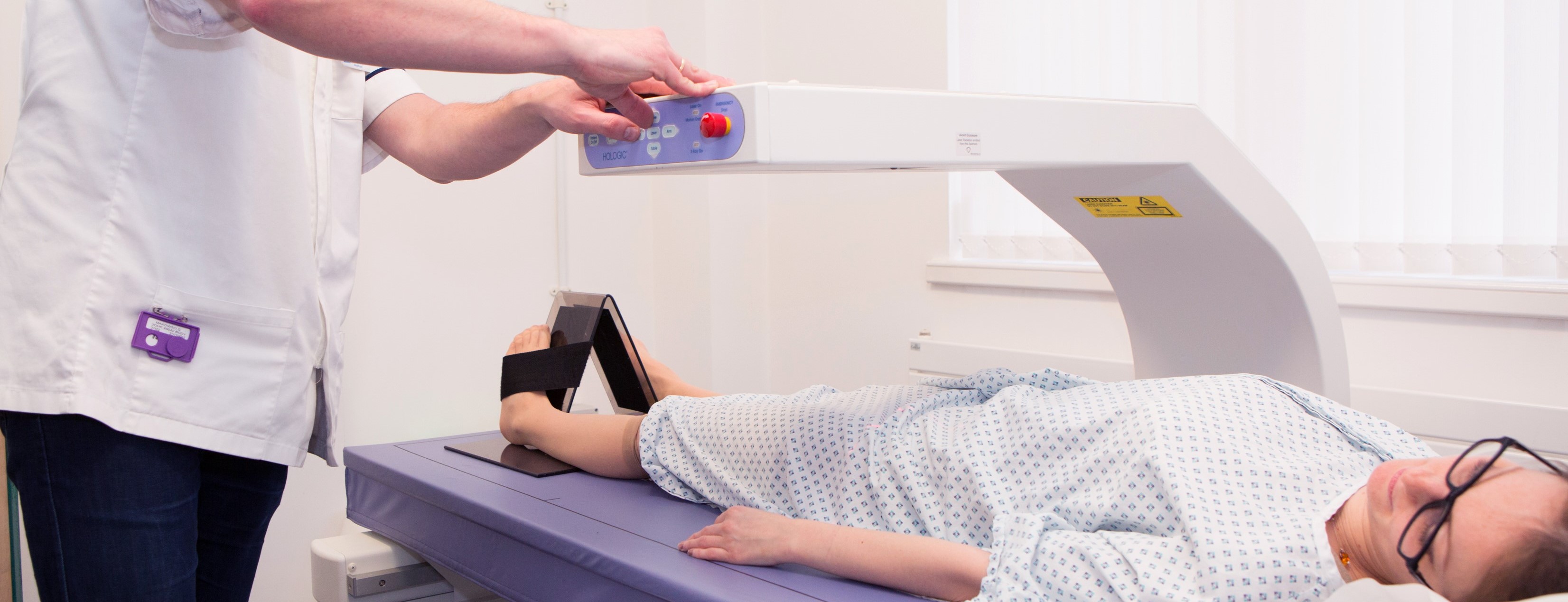
A typical dual-energy x-ray absorptiometry (DEXA) instrument consists of a padded table on which the patient lies and a movable C-arm with a radiograph tube below the patient and a detector above the patient. DEXA measures bone mineral content (BMC, in grams) and bone area (BA, in square centimeters), then calculates “areal” BMD in g/cm 2 by dividing BMC by BA. T-score, the value used for diagnosis of osteoporosis, is calculated by subtracting the mean BMD of a young adult reference population from the patient's BMD and dividing by the standard deviation (SD) of a young-adult population.
Z-score used to compare the patient's BMD to a population of peers, is calculated by subtracting the mean BMD of an age, ethnicity, and sex-matched reference population from the patient's BMD and dividing by the SD of the reference population. The mean BMD and SD of the reference populations used for…