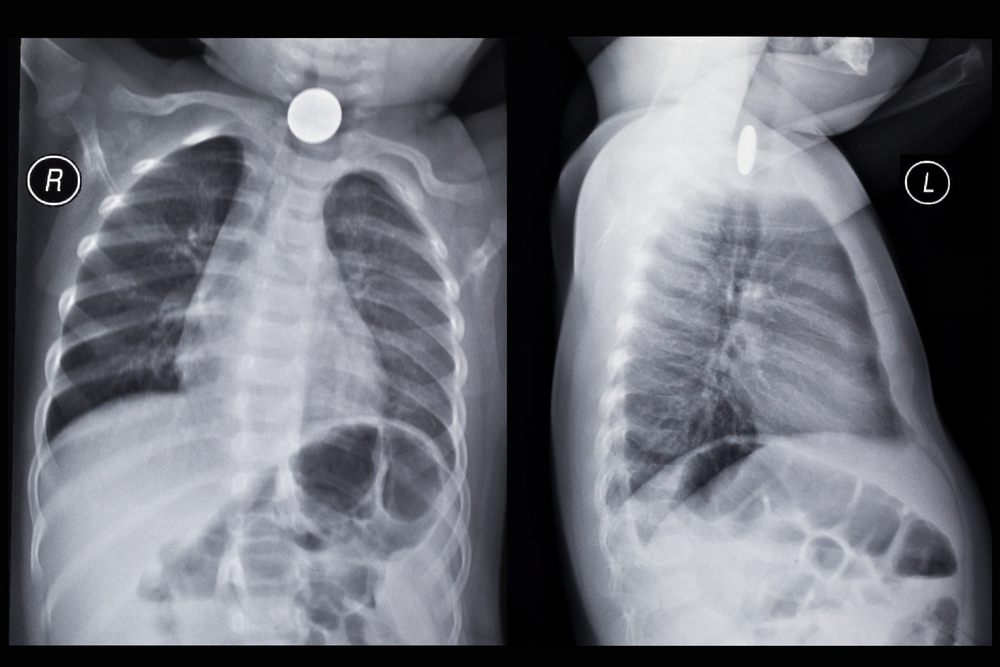
Ingestion of different foreign bodies is a very frequent phenomenon, especially in infants. Fortunately, most foreign bodies that reach the gastrointestinal tract pass spontaneously. Only 10 to 20% require endoscopic removal, and less than 1% requires surgical intervention. This article discusses the general approach to investigating esophageal foreign body. The primary investigation is based on history and physical examination before proceeding to imaging studies.
History and physical examination Airway and breathing : First point to examine. Neck: It may reveal swelling, erythema, or crepitus, suggesting that an esophageal perforation has occurred, and surgical consultation is mandatory. Chest: The chest examination may reveal inspiratory stridor or expiratory wheezing, suggesting a lodged esophageal foreign body with tracheal compression. Abdomen: The abdominal examination may show…