
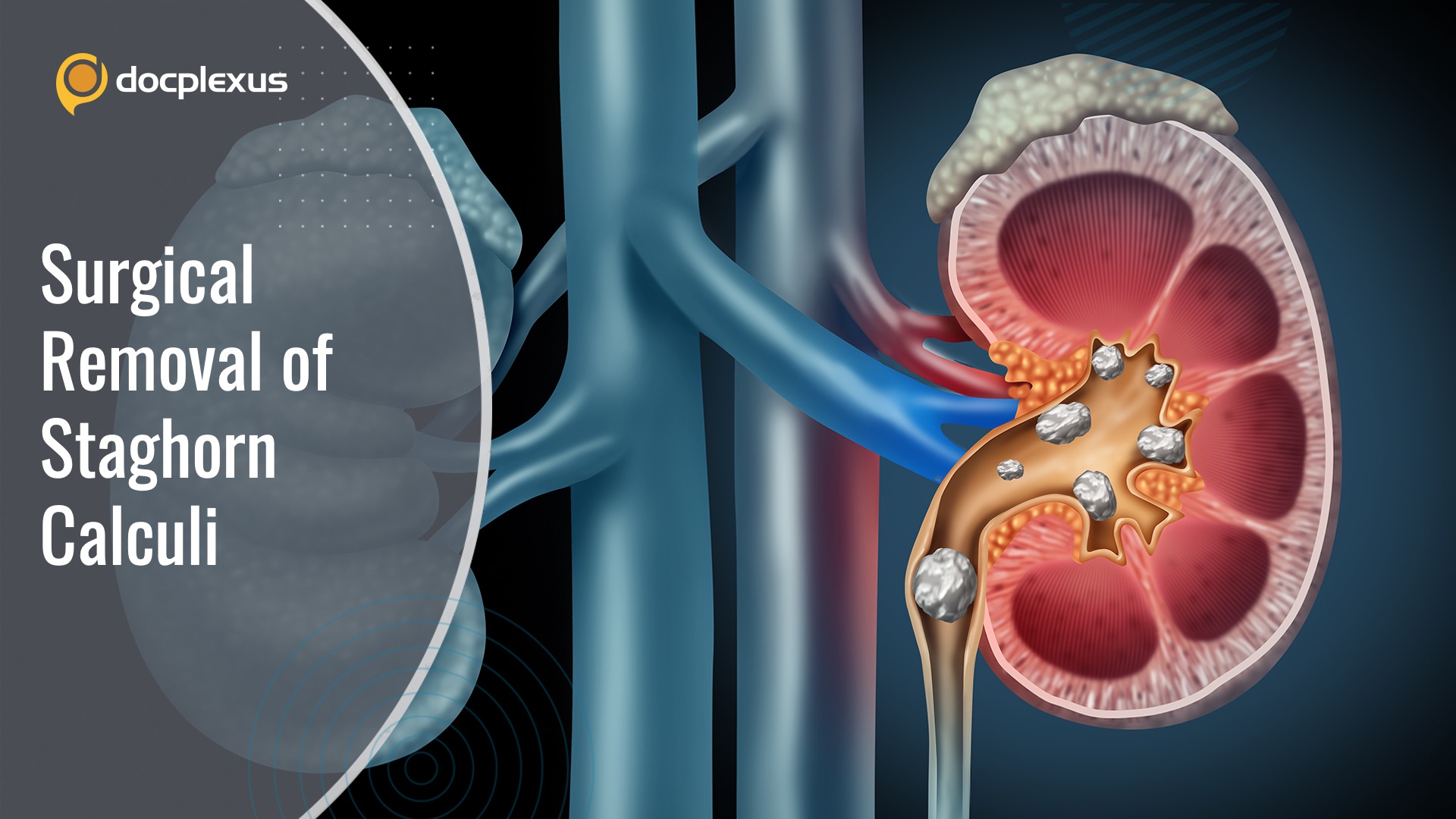
Staghorn calculus refers to a large, branched stone that occupies the urinary tract’s pelvicalyceal system. These calculi are made up of mixtures of magnesium ammonium phosphate (struvite) and calcium carbonate residues. Several risk factors contributing to staghorn calculi include neurogenic bladder, ureteral diversion to the ileum, and recurrent urinary tract infections (UTIs). The bacterial infection creates an alkaline environment that facilitates the formation of struvite crystals in the urinary tract. The accumulation of crystals is responsible for staghorn calculi formation. Treatment mainly involves removing these stones and curing the bacterial infection.
Which of the following techniques are considered a gold standard for the surgical removal of staghorn calculi? A. Percutaneous nephrolithotomy (PCNL) B. Anatrophic nephrolithotomy (AN) C. Shockwave lithotripsy (SWL) D.…